By Moses Chibuike Ezechukwu
An African healthcare experiment has evolved into one of the world’s most valuable drone delivery businesses. With $1.5 billion in fresh funding, a growing Nigerian presence and a major expansion agreement with Walmart, Zipline’s remarkable journey is putting Africa’s role in global technological innovation back in the spotlight.
A $21.5 Billion Milestone That Started in Africa
When American drone delivery company Zipline announced that it had raised $1.5 billion in fresh funding at a post-money valuation of $21.5 billion on November 5, 2026, it marked a remarkable moment in the development of autonomous delivery technology.
The latest funding round has pushed the company’s valuation to nearly three times its earlier $7.6 billion valuation reported in January 2026. It is an extraordinary rise for a business that initially built its reputation delivering blood and essential medical supplies to hospitals in parts of Africa.
The investment was led by Paradigm, WCM Investment Management and Layer Global, with participation from several major financial and technology players, including Fidelity Management & Research Company, Uber, Tiger Global, JPMorgan, ARK Invest, Salesforce Ventures and Valor Equity Partners.
According to Zipline, the new capital will support the expansion of its American manufacturing facilities, recruitment and the development of a nationwide drone delivery network across the United States.
However, beyond the impressive financial figures, there is a particularly interesting part of this story: Zipline’s journey began in Africa, where the need for reliable medical deliveries provided the foundation for its business model. Zipline
Why Zipline Chose Africa Before America
Founded in 2014, Zipline was established with an ambitious objective: to create a logistics system capable of transporting essential products quickly, regardless of geographical barriers.
Its founders recognised that traditional transportation systems were not always reliable, particularly in communities where poor road infrastructure, difficult terrain and long distances made the delivery of medical supplies challenging.
Interestingly, although the company was founded in the United States, it found its first major opportunity thousands of kilometres away in Rwanda.
The decision was not accidental. Zipline’s co-founder and chief executive, Keller Rinaudo Cliffton, previously explained that obtaining regulatory approval for this type of drone operation in America would be difficult. The company also wanted to work with a public healthcare system that could become an early customer and support the development of its technology.
Rwanda offered an opportunity to test the idea through a partnership with the government.
In 2016, Zipline began its first delivery operations in the country, transporting blood to hospitals that needed urgent supplies.
This was an important development in the history of commercial drone delivery.
Instead of relying entirely on road transportation, healthcare facilities could request supplies and receive them through autonomous aircraft.
The approach demonstrated that drone technology could serve a practical purpose beyond photography, surveillance and recreational activities.
It could become an important part of a country’s healthcare infrastructure. Zipline
From Rwanda to Nigeria: Africa’s Growing Role
Following its initial success in Rwanda, Zipline expanded its operations into other African countries, including Ghana, Nigeria, Kenya and Côte d’Ivoire.
Each market presented different logistical challenges, but the underlying objective remained largely the same: improve access to essential products by reducing the time and difficulty involved in transporting them.
Ghana became another important market for the company, particularly in the distribution of blood, vaccines and other medical products.
Nigeria, however, represents a particularly significant opportunity because of its population, geographical size and persistent healthcare supply challenges.
Zipline officially began operations in Nigeria in 2022, initially concentrating on medical deliveries and supporting healthcare facilities in underserved communities.
The company has since expanded its Nigerian operations. According to an August 2026 report by BusinessDay, Zipline had served more than six million people across three states, completed over 190,000 deliveries and transported more than 6.5 million vaccine doses.
These figures illustrate the potential of drone technology in a country where getting essential medical products to the right facility at the right time can make a significant difference.
In May 2026, TechCabal also reported that Zipline was planning to establish 12 additional distribution centres in Nigeria, potentially expanding its network from three operational hubs to 15.
The proposed expansion could connect up to 20,000 healthcare facilities and provide access to medical commodities for nearly 100 million Nigerians by 2028.
If successfully implemented, the expansion could represent a major development in Nigeria’s healthcare distribution system. Business Day
How the Technology Actually Works
One reason Zipline has attracted international attention is its ability to combine autonomous aircraft, distribution centres and sophisticated logistics software into one delivery network.
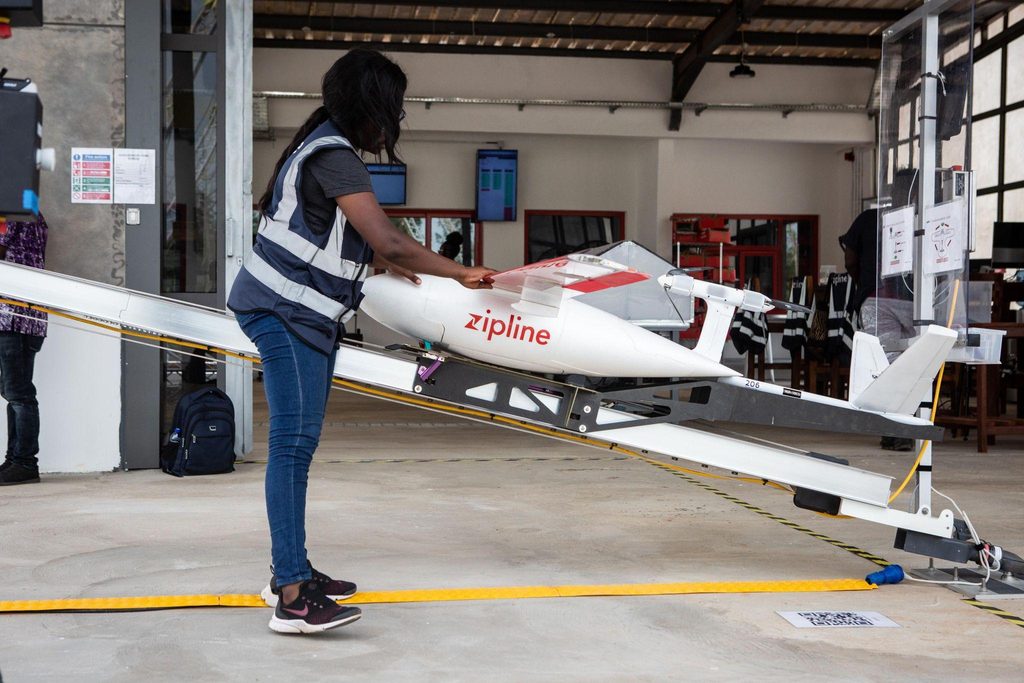
Its original delivery model uses long-range drones capable of transporting medical supplies over considerable distances.
Healthcare facilities can request products, which are prepared at distribution centres before being dispatched through autonomous aircraft.
Upon reaching the destination, the aircraft releases its package, allowing the supplies to reach the receiving facility without requiring the aircraft to land.
This approach is particularly useful when delivering blood products, vaccines and essential medicines to locations where road transportation may be unreliable or time-consuming.
The company has also developed a second delivery platform designed for consumer products and home deliveries.
This technology has helped Zipline move beyond healthcare into retail, food and other commercial delivery services.
In other words, what began as a solution to medical logistics problems is gradually becoming a broader alternative to conventional transportation and last-mile delivery services. Zipline
Why America Eventually Became a Major Market
Although Zipline started its commercial journey in Africa, the United States has gradually become an increasingly important market.
One of the biggest challenges facing drone delivery companies in America has been regulation.
The Federal Aviation Administration (FAA) requires operators seeking to deliver packages commercially to obtain appropriate certification under Part 135, alongside relevant authorisations for operations beyond the pilot’s visual line of sight.
These requirements involve extensive safety assessments, operational approvals and certification processes.
Zipline eventually secured its Part 135 air carrier certification in June 2022, becoming the first fixed-wing drone operator to complete air carrier certification through the FAA’s BEYOND programme.
It subsequently established commercial operations in America, using experience gained from its African operations to develop its delivery systems.
The transition is significant because it demonstrates how a company can develop and refine technology in one market before taking it into more commercially demanding environments.
Africa was not simply a destination for Zipline’s expansion. It was an important part of the company’s operational development.
Federal Aviation Administration
Walmart’s 300-Site Expansion Signals Bigger Ambitions
Perhaps one of the strongest indications of Zipline’s commercial potential is its growing relationship with American retail giant Walmart.
On November 5, 2026, Walmart announced a new multi-year agreement with Zipline to establish 300 additional drone delivery sites across the United States.
The agreement builds on a partnership that began in 2021. According to Walmart, its existing drone delivery programme has already completed more than two million deliveries.
The service allows eligible customers to order thousands of everyday products through Walmart’s application or website and receive their purchases directly at home.
Depending on the location and availability, deliveries can arrive in as little as 30 minutes.
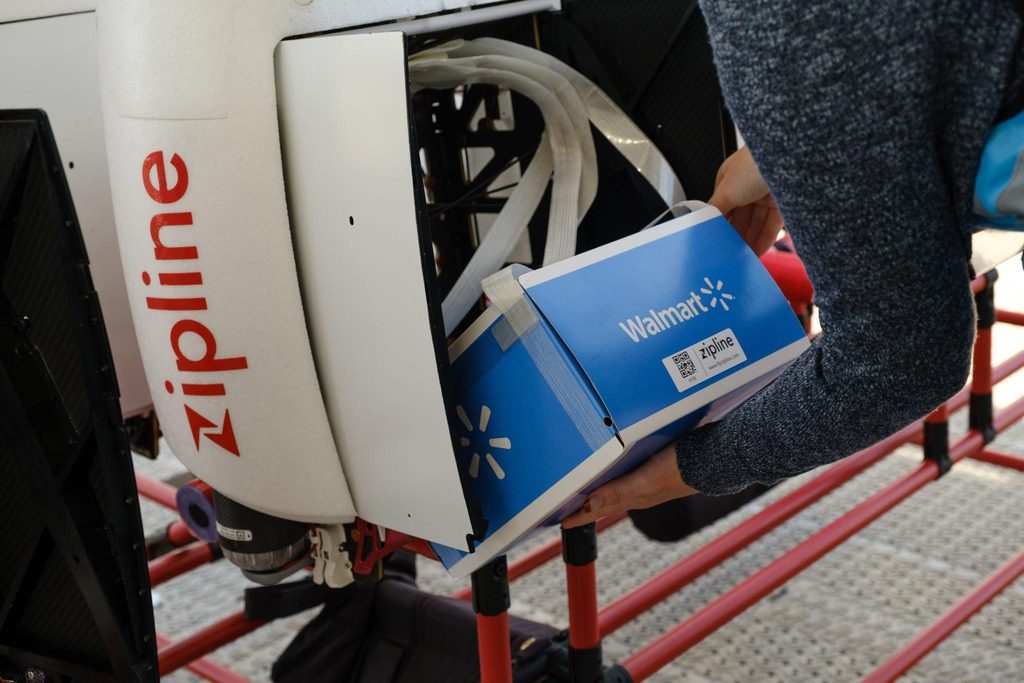
Zipline’s technology uses a delivery system in which the drone remains approximately 330 feet above the ground while a separate package pod descends on a tether to deliver the customer’s order.
This arrangement is designed to improve delivery efficiency while reducing the need for the aircraft to land in residential areas.
For Walmart, the partnership represents an opportunity to strengthen its delivery services and compete in an increasingly demanding retail environment.
For Zipline, the additional 300 locations represent a significant opportunity to expand its commercial footprint and demonstrate that autonomous delivery can operate at a much larger scale.
Walmart has also indicated that the agreement could accommodate further expansion beyond the 300 additional sites. corporate.walmart.com
What Zipline’s Success Means for Africa
There is an important lesson for African entrepreneurs, investors and policymakers in Zipline’s journey.
For years, Africa has been viewed primarily as a market for foreign technology companies to introduce products and services developed elsewhere.
However, Zipline’s experience demonstrates that the continent can also provide the environment in which globally competitive technologies are tested, developed and refined.
The challenges facing African countries, particularly in healthcare, agriculture, transportation and infrastructure, create opportunities for businesses willing to develop practical solutions.
Nigeria, for example, continues to experience challenges with healthcare distribution, rural connectivity and the transportation of essential goods.
Drone delivery cannot independently solve all these problems, but it offers another tool that governments and private organisations can incorporate into existing infrastructure.
There are also opportunities for African technology entrepreneurs to develop solutions around drone maintenance, manufacturing, software development, aviation logistics and specialised delivery services.
However, realising these opportunities will require more than enthusiasm for emerging technologies.
Governments must establish clear regulations, encourage responsible private investment and create an environment where innovative businesses can operate without unnecessary administrative barriers.
There is also a need to strengthen local technical expertise so that African countries do not remain dependent on foreign companies for every aspect of advanced technology.
Zipline’s expansion into Nigeria provides an opportunity to consider how such partnerships can create employment, transfer knowledge and strengthen local technological capabilities.
The bigger question is whether African countries can use this moment to build their own globally competitive technology businesses rather than simply becoming customers of successful foreign innovations.
Beyond the $21.5 Billion Valuation
Zipline’s latest funding round is undoubtedly a major achievement, but its long-term success will depend on its ability to turn investor confidence into sustainable commercial growth.
The company must continue addressing operational costs, aviation safety, regulatory requirements, competition and the practical challenges of expanding autonomous delivery networks.
Its $21.5 billion valuation reflects investor expectations about the future of drone logistics, but valuation alone does not guarantee profitability or long-term success.
Nevertheless, the company’s journey from delivering blood to hospitals in Rwanda to securing major commercial partnerships in the United States represents an important chapter in the evolution of global technology.
For Nigeria and the wider African continent, the story carries an even bigger message.
Some of the world’s most important technological breakthroughs may emerge from attempts to solve problems that have existed in developing economies for generations.
Zipline started by addressing a problem that African healthcare systems understood all too well: getting essential medical supplies to people who needed them, regardless of where they lived.
Today, that same technology is attracting billions of dollars in investment and reshaping conversations about the future of global delivery.
Perhaps the most remarkable part of the story is not that an American company has reached a $21.5 billion valuation.
It is that a technology whose early commercial success was built in Africa is now helping shape the future of logistics in some of the world’s largest economies.
For a continent often described by the challenges it faces, that is a story worth paying attention to.