


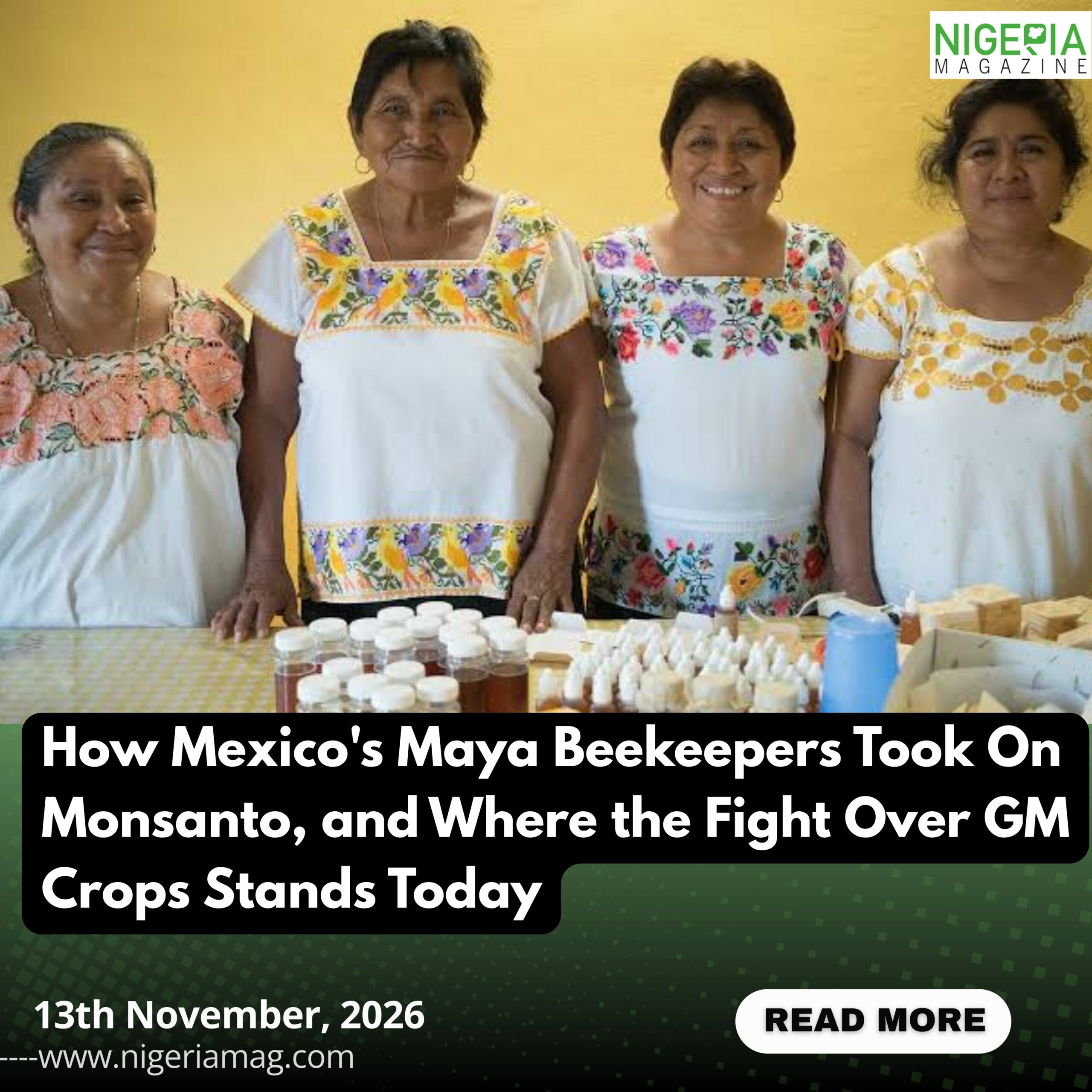
When Mexico’s government gave Monsanto permission in 2012 to grow genetically modified, glyphosate-tolerant soybeans across seven states, the approval covered much of the Yucatán Peninsula. That region is one of the country’s most important sources of organic honey. For the Maya beekeepers who live and work there, the decision threatened their livelihood.
Beekeepers, backed by groups including Greenpeace, Indignación and Litiga OLE, warned that the soy plantings would endanger honey production and the livelihoods of about 15,000 Maya families. The soybeans are engineered to tolerate glyphosate, so growing them means spraying the herbicide heavily, and glyphosate has been classified as a probable carcinogen. The communities also pointed out that they had never been consulted. The government had issued the permits without asking the people who would live beside the fields.
In November 2015, the Second Chamber of Mexico’s Supreme Court ruled unanimously in their favour. It found that the state had violated the Maya communities’ right to free, prior and informed consultation, and it suspended the permit until that consultation took place. Two years later, in September 2017, Mexico’s food and agricultural service revoked Monsanto’s soy permit in all seven states. It was the first time the government had taken official action to shield communities and the environment from a genetically modified crop.
It is worth being precise about what the court decided. The ruling turned on the right to consultation, not on a finding that GM soy is harmful. Some advocacy groups have also said the ruling did not settle the question of consent. Reports from the region suggest that spraying and illegal soy planting have continued in places, and that the consultation process has stalled.
The next chapter concerned corn, which has deep cultural importance in Mexico. Commercial planting of GM corn had already been blocked by a 2013 court injunction and restricted by a 2022 measure. After a trade panel under the US-Mexico-Canada Agreement ruled in December 2024 against Mexico’s wider restrictions on GM corn, Mexico lifted its import limits. President Claudia Sheinbaum then pushed a constitutional amendment through Congress to ban the planting of GM corn. She signed it in March 2025, and the text describes native corn as an element of national identity.
This was not a ban on all GM corn. Mexico still buys roughly $5 billion worth of US GM corn each year, mostly for animal feed. The amendment applies to what can be grown in Mexican soil, and some planting is still reported despite the legal restrictions.
The Mexican story is not a simple victory over a corporation. It shows what it took to get there: years of litigation, scientific evidence on pollen and honey, and communities that kept pressing their case. It also shows that winning in court or in a constitution is only the first step. Enforcement is the harder part, and trade obligations can limit how far a country’s protections go.
For readers across Africa, where debates over GM crops, land and farmers’ rights are ongoing, the lesson is that consultation can be a legal right as well as a courtesy. The Maya beekeepers made that argument and won on it.

