


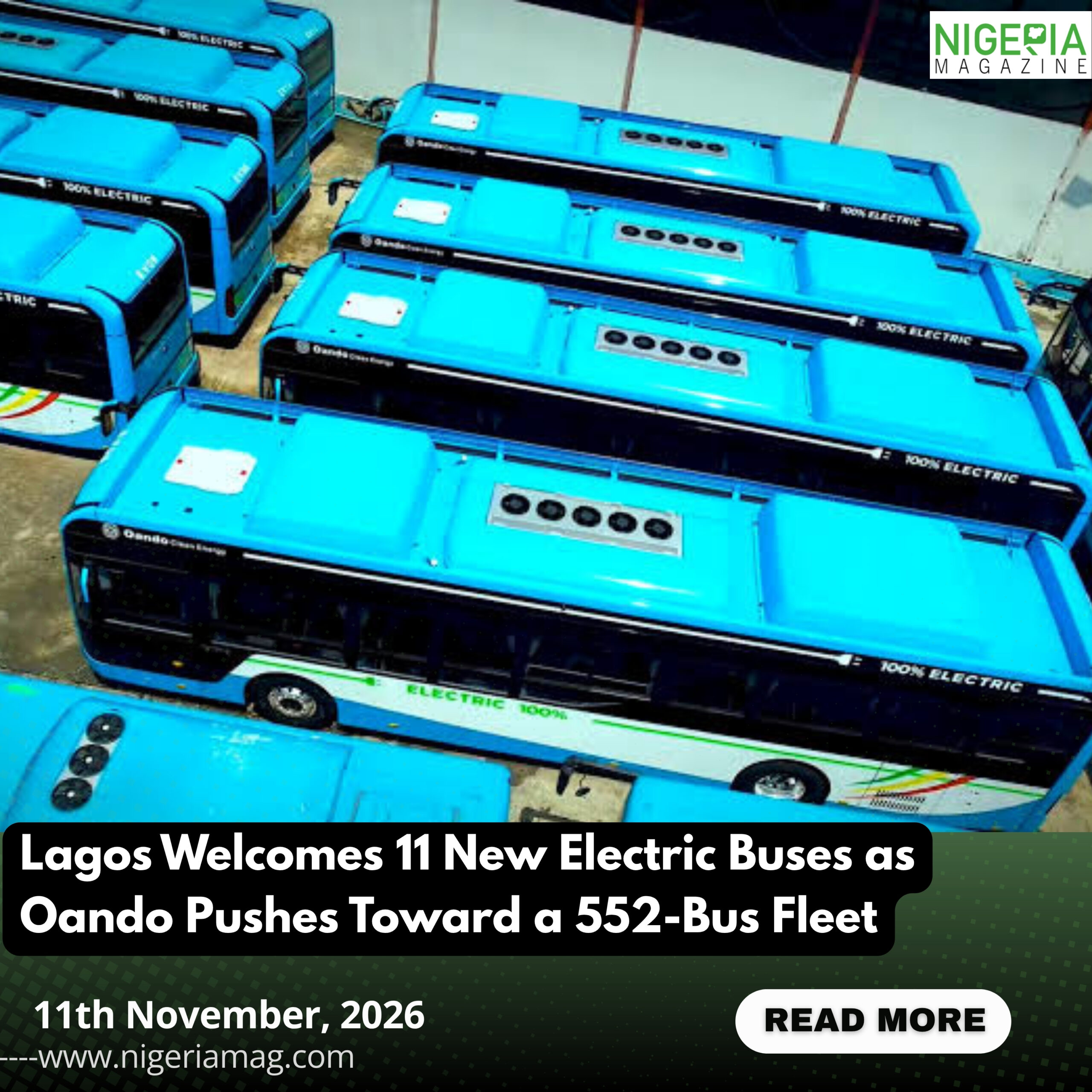
Lagos has taken delivery of 11 new electric buses supplied by Oando Clean Energy Limited to the Lagos Metropolitan Area Transport Authority (LAMATA). The delivery is the latest step in a partnership aimed at putting 552 electric vehicles on the state’s public transport network.
The 11 buses bring the number supplied by Oando under the initiative to 13. The other two were delivered and deployed in May 2023 as a proof of concept, and have been running since.
The news was shared by Hadiza Adukonu, Vice President, Opportunity, Maturation & New Ventures at Oando Clean Energy, in a video posted by LAMATA on X announcing the arrival. She explained that the 11 vehicles are the first batch of an additional 50 planned for Lagos, with 39 more to follow. The 552-bus figure is the long-term destination rather than an immediate delivery target.
The partnership started in 2022, when Oando Clean Energy and LAMATA signed a Memorandum of Understanding covering electric mass transit buses and the ecosystem around them, including charging infrastructure and service centres. The pilot buses were the first test of that plan.
Adukonu also shared performance data from the first two buses over their three years of operation, covering passenger capacity, distance covered and energy consumption. She noted that regenerative energy recovery gives the buses extra power during operation and improves their efficiency. Other reports on the pilot put the buses at about 788,000 passengers carried and 433,000 kilometres covered.
The 11 new buses have arrived, but they are not yet carrying passengers. They are expected to enter service in the fourth quarter of 2026, with LAMATA managing their deployment on behalf of the Lagos State Government.
The delivery fits a wider shift in Lagos transport policy. Since the start of 2026, LAMATA has restricted operators introducing new buses to compressed natural gas (CNG) and electric vehicles, and existing diesel buses are expected to be phased out over time. The state’s transport policy also targets having 52 percent of BRT buses powered by clean energy by 2050.
For commuters in Africa’s largest city, the electric fleet is still small next to the scale of the city’s daily demand. But with a pilot that has run for three years and a larger batch on the way, the move from experiment to rollout is now underway.

