


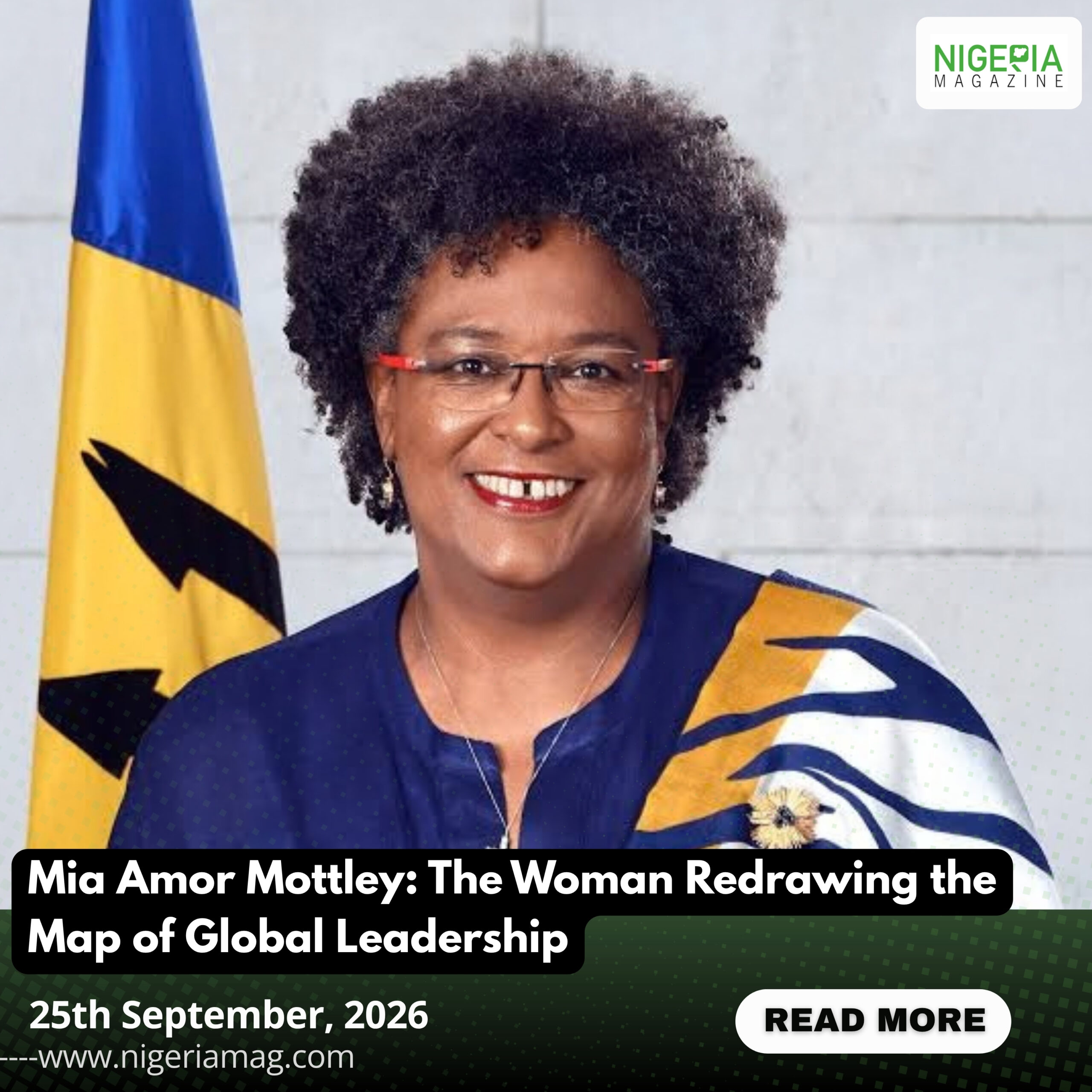
When Mia Amor Mottley walked into the Prime Minister’s office in Barbados in 2018, she carried more than a mandate; she carried history. As the eighth Prime Minister of the small Caribbean nation and the first woman to ever hold the post, her rise marked a turning point not just for Barbados, but for how the world thinks about leadership from small island states.
Born on October 1, 1965, Mottley trained as a lawyer at the London School of Economics before returning home to enter politics. By age 29, she was Minister of Education; one of the youngest cabinet appointees in Barbadian history. She would later become the first woman to serve as both Attorney General and Deputy Prime Minister, steadily building a reputation as a formidable political operator long before she reached the nation’s highest office.
Her 2018 election victory was historic on its own terms: her Barbados Labour Party swept every single seat in the House of Assembly, an unprecedented result. She repeated the feat in 2022, cementing her dominance of Barbadian politics.
But it is on the world stage where Mottley has arguably left her deepest mark. In 2021, she led Barbados through a landmark constitutional shift, transitioning the country into a republic and removing the British monarch as head of state; a move steeped in symbolism for a nation once built on the machinery of the transatlantic slave trade. She has also emerged as one of the most forceful global voices on climate finance, championing the “Bridgetown Initiative” to reform how the world funds climate adaptation for vulnerable nations, and has openly called on former colonial powers to reckon with reparations for slavery.
Her advocacy has not gone unnoticed internationally. In 2021, the United Nations named her a Champion of the Earth, and in 2022, TIME magazine included her on its list of the 100 most influential people in the world.
Mottley’s story resonates well beyond the Caribbean. For nations across the Global South; including Nigeria; her insistence that small, historically marginalized countries deserve a seat at the table on issues like climate justice and economic equity offers both a model and a challenge: that size need not determine influence, and history need not determine destiny.

