


By Nigeria Magazine Desk
What began as a mother’s search for reliable childcare has grown into an initiative helping to transform the way caregiving is viewed and practised in Nigeria.
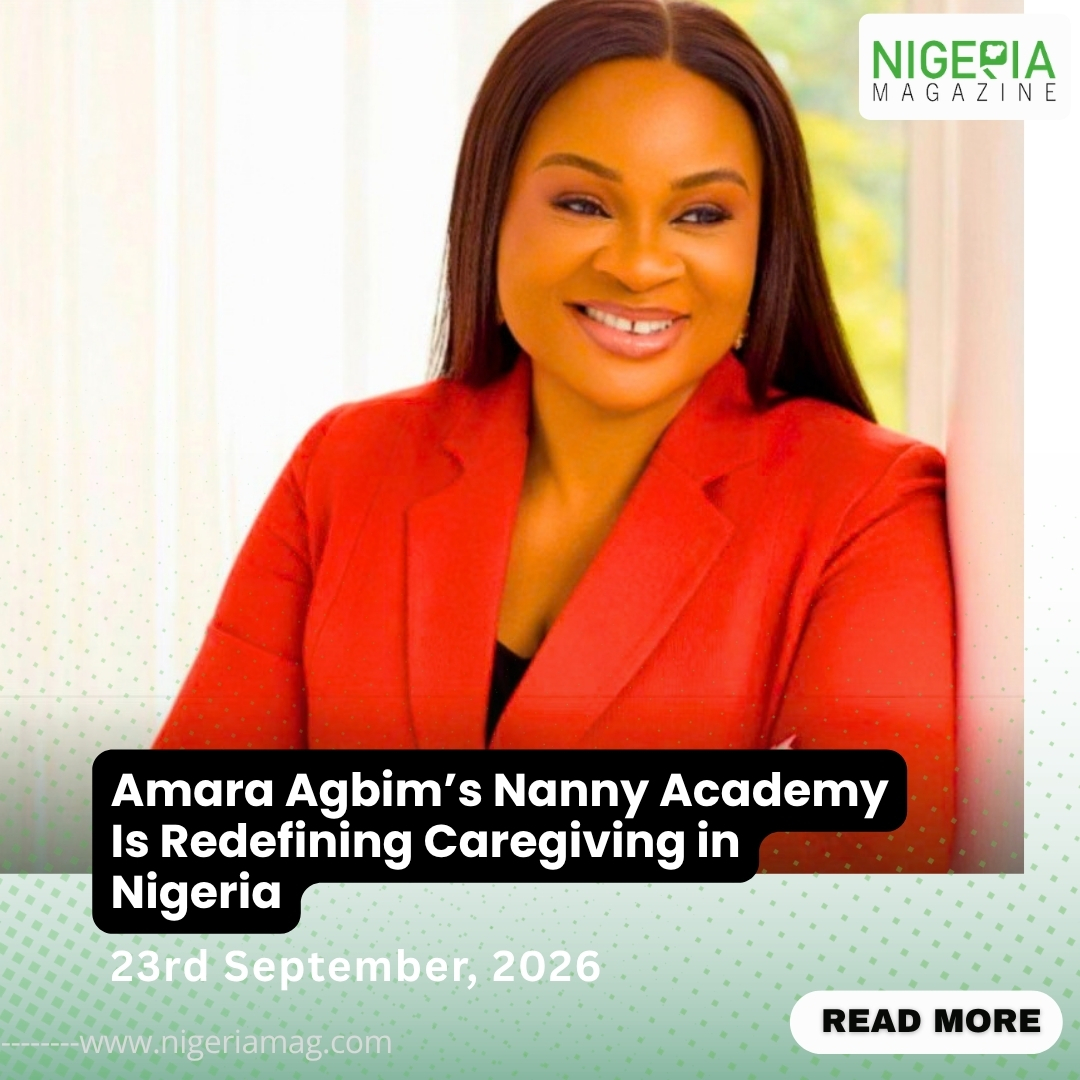
Amara Agbim’s journey into professional caregiving began after she became a mother in Lagos. In her search for dependable childcare, she chose to employ a professional nanny rather than rely on underage domestic workers.
However, she soon noticed something that went beyond the need for quality childcare.
Her nanny was uncomfortable openly identifying her occupation because of the stigma often associated with domestic caregiving.
That experience stayed with Agbim and eventually inspired her to create a different pathway for caregivers—one built around training, dignity, professionalism and opportunity.
Sixteen years later, that vision has grown into The Nanny Academy, an initiative focused on equipping caregivers with professional skills and creating opportunities for them to build sustainable careers.
According to a profile shared by The African Startup Magazine, Agbim’s work has helped train and create opportunities for thousands of Nigerians. Some graduates of the academy have gone on to earn more than ₦1 million per month, demonstrating the economic possibilities that can emerge when caregiving is treated as a skilled profession.
For Agbim, the mission goes beyond training people to become nannies. It is also about changing perceptions around a profession that is often overlooked despite the enormous responsibility involved.
Professional caregivers play an important role in families, particularly in homes where parents need reliable support with childcare. Their responsibilities can include caring for children, supporting their development and wellbeing, maintaining routines and providing assistance that requires patience, responsibility and specialised skills.
By creating a structured training pathway, The Nanny Academy is helping to position caregiving as legitimate professional work rather than an occupation to be hidden or undervalued.
Agbim recently reflected on the journey, noting that the nanny who cared for her child had “a name, a skill, and a shame about saying her job title out loud.” She described that moment as the beginning of a journey that eventually led to the establishment of The Nanny Academy.
The academy’s story also highlights the connection between skills development and economic empowerment. For caregivers, professional training can provide access to better employment opportunities, increased earning potential and the confidence to see caregiving as a career.
As Nigeria continues to navigate changing family structures, employment demands and the growing needs of working parents, the demand for dependable childcare and professionally trained caregivers remains significant.
Agbim’s story demonstrates how identifying an overlooked problem can lead to a solution with wider social and economic impact.
What started with one mother looking for quality childcare has evolved into an effort to give caregivers the skills, dignity and opportunities to build meaningful careers.
The Nanny Academy’s journey is ultimately a reminder that professionalising overlooked areas of work can create opportunities—not only for individuals, but also for the families and communities they serve.

