



By Moses Chibuike Ezechukwu
The Federal Competition and Consumer Protection Commission says preliminary findings from a three-month investigation point to possible price manipulation in Nigeria’s cement market, raising fresh questions about production capacity, pricing and competition in the sector.
Tuesday, August 18, 2026 — The rising cost of cement in Nigeria has come under renewed scrutiny following preliminary findings by the Federal Competition and Consumer Protection Commission (FCCPC), which suggest that the price of the widely used building material may not be fully explained by normal market forces.
The Commission said its findings are the outcome of a three-month, cross-border investigation conducted by its Anticompetitive Practices Department (ACP) in response to widespread complaints from consumers and stakeholders over the high price of cement in Nigeria.
The investigation, contained in a 40-page field report, examined the structure of Nigeria’s cement market and compared it with markets in several African countries, including Kenya, Tanzania, South Africa, Egypt, Morocco, Algeria and Togo.
At the centre of the Commission’s concern is a question that has increasingly become difficult for consumers to ignore: why is cement so expensive in Nigeria despite the country’s large limestone deposits, substantial domestic production capacity and reported surplus capacity?
According to the FCCPC, all major cement manufacturers in Nigeria cooperated with the investigation by providing records requested by the Commission, with the exception of one company.
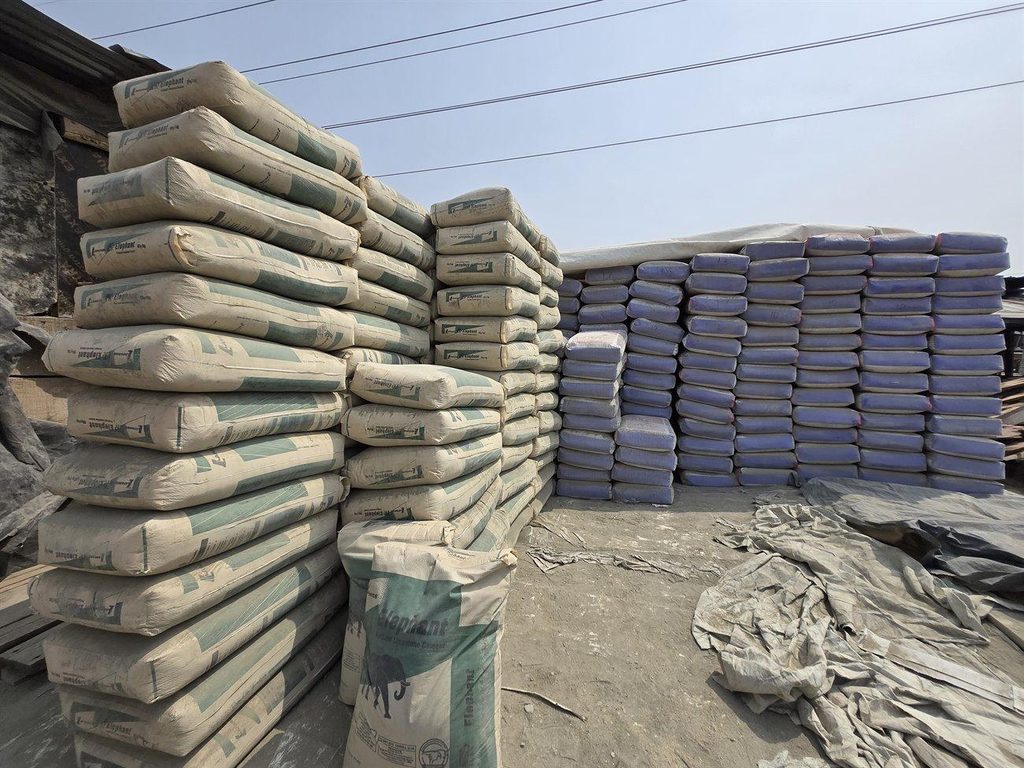
Publicly available estimates reviewed by the Commission indicate that three major companies account for more than 90 per cent of the country’s installed cement production capacity. This level of market concentration has now become an important part of the Commission’s examination of how prices are determined.
How Nigeria Compares With Other Markets
The investigation also looked beyond Nigeria, with the Commission examining cement prices and market conditions in other countries.
In Kenya, which has a population of approximately 58.6 million, domestic cement demand was estimated at about 9.3 million metric tonnes per annum in 2025. Despite having a population about 76 per cent lower than Nigeria’s, the country has access to limestone resources, while a bag of cement in Nairobi was reported to retail at approximately $5.40, equivalent to about N7,344.
Tanzania, with an estimated population of 66.3 million and domestic cement demand of about 9.3 million metric tonnes in 2025, recorded a reported retail price of approximately $4.80, or N6,528, for a bag of cement.
The comparison becomes particularly interesting in Togo, where a bag of cement reportedly sells for about $6.75, equivalent to N9,180. Unlike Nigeria, Togo does not have significant limestone deposits.
Nigeria’s situation presents a different picture.
Market intelligence reviewed by the Commission shows that the price of a 50kg bag of cement increased considerably during the first half of 2026.
In January, a bag reportedly sold for between N9,300 and N9,700. By the middle of the year, the price had risen to between N10,500 and N13,000. By July, prices ranging from N13,000 to N15,000 were being reported in parts of the country.
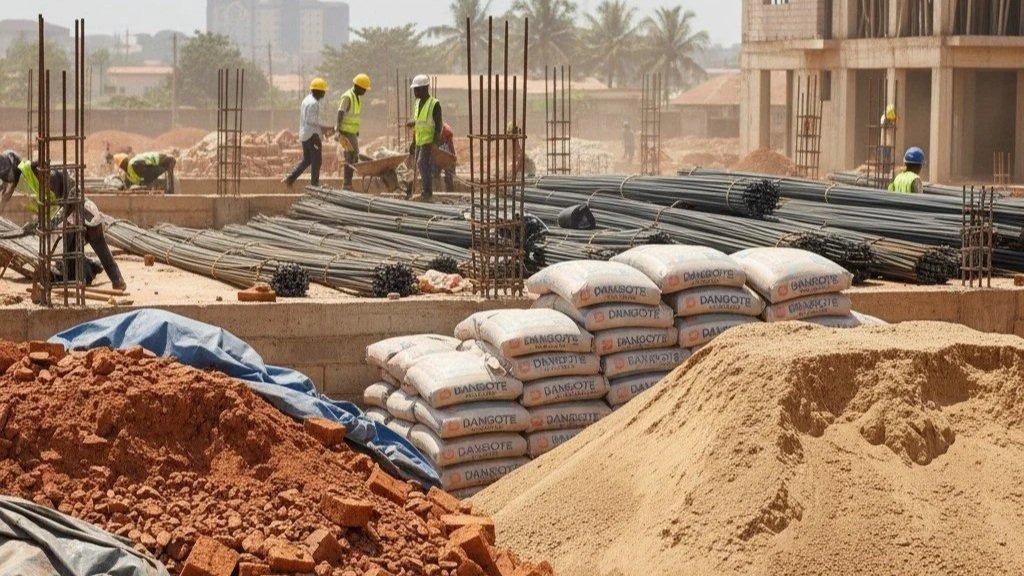
For builders, developers and ordinary Nigerians hoping to construct homes, the increase has become more than a market statistic. It has translated into higher construction costs and, in many cases, delayed building projects.
Nigeria’s Production Capacity Under Scrutiny
The FCCPC’s preliminary assessment indicates that Nigeria has an installed cement production capacity of more than 60 to 65 million metric tonnes annually, while estimated domestic consumption stands at approximately 25 to 30 million metric tonnes.
In other words, the country’s installed capacity is significantly higher than estimated domestic demand.
Nigeria is also reported to be a net exporter of cement to neighbouring countries.
Ordinarily, such excess production capacity could be expected to create competitive pressure, with manufacturers competing for consumers and potentially lowering prices. However, the Commission said this expected downward pressure has not been sufficiently evident in the Nigerian market.
That discrepancy is one of the issues the FCCPC says it is now investigating more closely.
The Commission is not, however, concluding that manufacturers have acted unlawfully.
Industry participants have identified several factors that could legitimately contribute to the price of cement, including high energy costs, the depreciation of the naira and the resulting impact on imported machinery and spare parts, as well as transportation and logistics expenses.
The FCCPC says it is testing these explanations against verified information concerning production costs, pricing, capacity utilisation and other market conditions.
Investigation Moves Into Next Phase
While the findings remain preliminary, the Commission said they provide sufficient grounds for the investigation to continue.
The next phase will focus on determining whether current cement prices can reasonably be explained by legitimate operating costs and prevailing economic conditions or whether there is evidence of conduct that could violate Nigeria’s competition laws.
Among the issues being examined are possible coordinated conduct between market participants, abuse of market power, restrictions on domestic supply, anti-competitive distribution practices and other behaviour prohibited under the Federal Competition and Consumer Protection Act.
The FCCPC has consequently issued Notices of Commencement of Investigation and Summons to Produce to key players in the cement industry.
The companies have been asked to provide information and records relating to their pricing methodologies, production levels, capacity utilisation, exports and relevant commercial relationships.
The investigation could therefore become significant not only for cement manufacturers but also for millions of Nigerians affected by the cost of construction.
FCCPC: The Goal Is Competition, Not Price Control
Explaining the Commission’s intervention, FCCPC Executive Vice Chairman and Chief Executive Officer, Mr. Tunji Bello, said the investigation was driven by the importance of cement to Nigeria’s economy.
“Cement occupies a strategic place in the Nigerian economy,” Bello said, noting that its price has a direct impact on housing, commercial developments, public infrastructure and the broader cost of doing business.
He stressed that the Commission’s responsibility is to examine market conditions where consumers and the wider economy may be significantly affected.
Bello also clarified that the investigation should not be interpreted as an attempt by the government to dictate how businesses set their prices.
According to him, businesses have the right to make legitimate commercial decisions and earn returns on their investments.
However, competition law exists to ensure that prices, output and other market outcomes are shaped by genuine competition rather than unlawful practices that restrict competition.
That distinction could prove important as the investigation progresses.
For now, the FCCPC has not announced a final determination that cement manufacturers manipulated prices or breached competition laws. The current findings are preliminary, and the investigation remains ongoing.
Nevertheless, the development is likely to attract considerable attention from consumers, builders, manufacturers and policymakers.
With cement prices having risen sharply in several parts of the country, the outcome of the FCCPC investigation could help answer a question that has been at the heart of public frustration for months: whether Nigerians are paying more because of genuine production and distribution costs, or whether deeper competition problems exist within the market.
For consumers, the hope is that the investigation will ultimately bring greater transparency and a clearer understanding of how the price of one of Nigeria’s most essential construction materials is determined.
#NigeriaMagazine #Cement #FCCPC #Nigeria #CementPrices #ConsumerProtection #Competition #NigerianEconomy #Construction #BusinessNews #EconomicNews #PriceManipulation #MarketCompetition #NigeriaBusiness #MosesChibuikeEzechukwu

