


By Kede Aihie
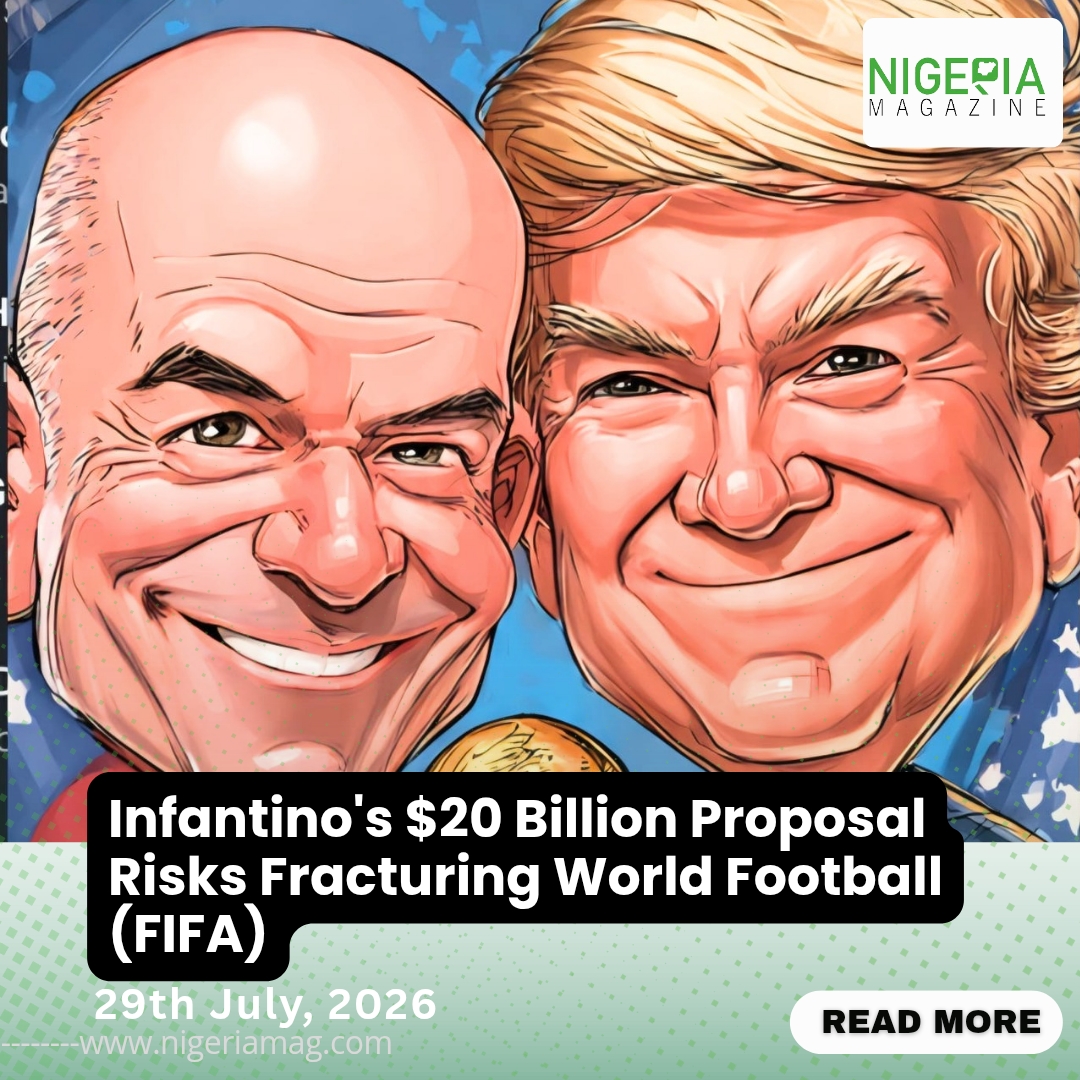
FIFA has proposed a $20 billion subsidiary to run the World Cup and its other commercial events, and the sheer scale has put it on a collision course with its most powerful members. The new entity, FIFA Forward Enterprise, would consolidate FIFA’s most valuable assets and sell minority stakes of up to 20%, a potential $4 billion capital raise. FIFA says the goal is to expand “football development funding” to more than $10 billion and give each of its 211 member associations up to $20 million in one-off capital. For many smaller federations, that $20 million is staggering, and it is the centerpiece of FIFA’s argument that the money will grow the game globally.
The logic is distinctly American. President Gianni Infantino says FIFA must scale the sport’s “remarkable commercial value.” The proposed lead investor is Thrive Eternal, a US venture firm founded by Joshua Kushner, brother of Jared Kushner, Donald Trump’s son-in-law. Bringing in private capital at this level would be a fundamental shift. World Cup revenue has traditionally cycled through associations and confederations. A venture-backed FFE introduces expectations of growth, exits, and returns that do not fit FIFA’s nonprofit model. It also imports US-style dealmaking, media packaging, and sponsorship leverage, potentially turning the World Cup from a quadrennial tournament into a year-round commercial platform.
The process has fueled suspicion. FIFA outlined the structure but gave few details on valuation, governance, or how investors will be chosen. Terms for the stakes and oversight of FFE remain undefined, which critics call opaque. The Times reported the arrangement could earn Infantino tens of millions of pounds. FIFA said there has been no discussion of Infantino leading FFE, but also that leadership “has a duty” to control the project.
UEFA accused FIFA of putting the game’s “soul” up for sale. Andy Burnham said “football does not belong to investors” and the World Cup was “never anyone’s to sell.” The FA said it was not consulted. For Europe, US financial involvement means new priorities: maximizing broadcast windows and prioritizing the highest-return markets.
Boycott talk is now growing, but a split is not certain. The plan needs approval from all 211 members, and FIFA is targeting smaller nations with direct funding. Europe cannot block it alone.
The likely outcome is confrontation, not separation. If Europe boycotts, the World Cup’s credibility suffers. If FIFA adds transparency and brings UEFA back, it holds together, with American investors embedded. FIFA is testing whether money can buy unity without transparency. The coming weeks will decide if this is reform, or the start of a permanent divide.

