


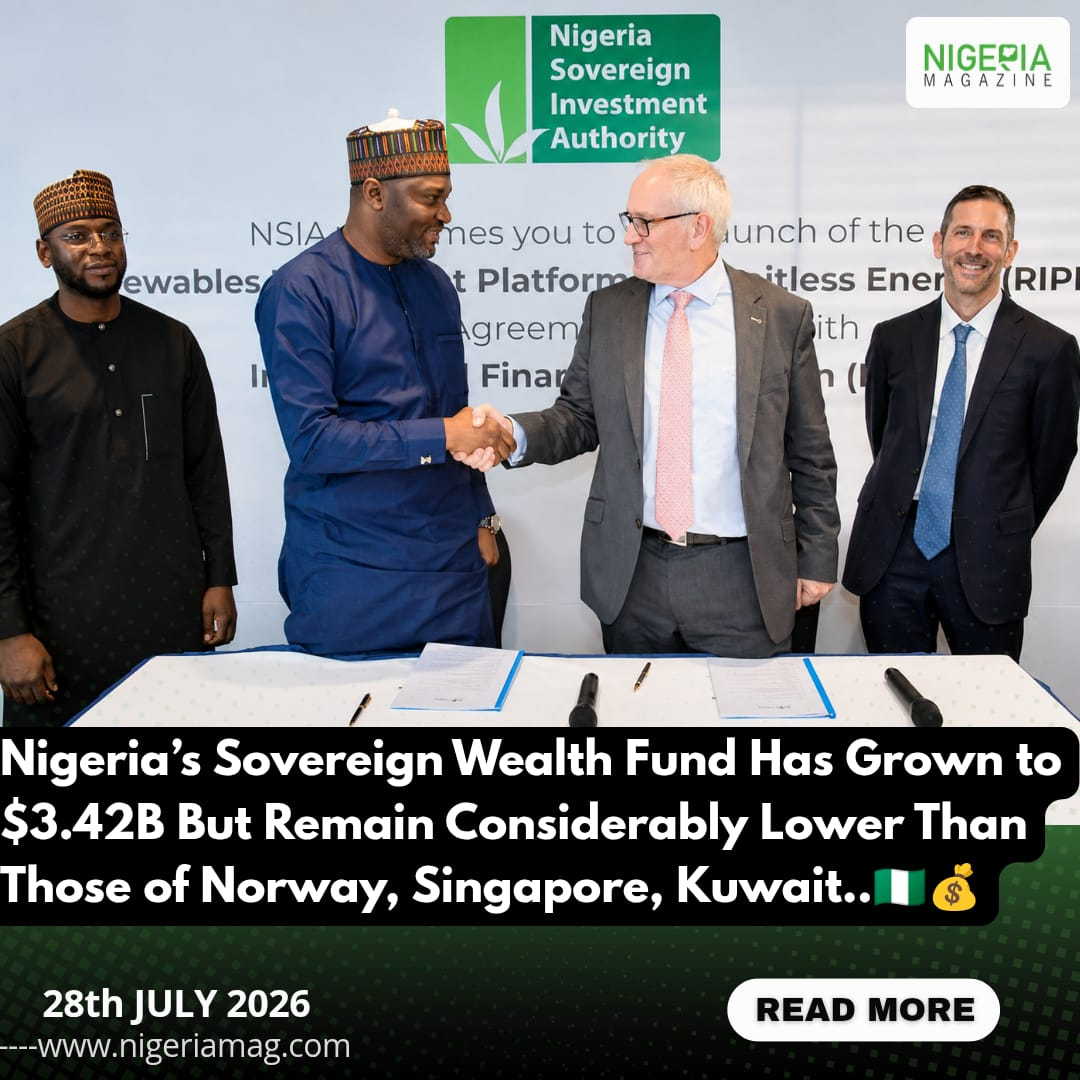
Nigeria’s Sovereign Wealth Fund, managed by the Nigeria Sovereign Investment Authority (NSIA), now holds $3.42 billion in assets.
The NSIA was established under the NSIA Act of 2011 and began operations in 2012 with a starting capital of $1 billion. The idea behind it was straightforward: channel a portion of the nation’s oil revenue into long-term value, so that today’s spending doesn’t come at the expense of tomorrow’s generations.
The fund operates through three arms, each with a distinct mandate. The Stabilisation Fund acts as a buffer to shore up the economy during periods of financial stress. The Future Generations Fund is built for long-term investment on behalf of Nigerians not yet born. And the Nigeria Infrastructure Fund channels capital into roads, power, healthcare, and agriculture.
Nigeria isn’t alone in this approach; sovereign wealth funds have long been used by resource-rich nations to convert finite commodity wealth into lasting, diversified assets.
How can Nigeria’s Sovereign Wealth Fund generate much more than $3.42 billion for more long-term value similar to those of Norway🇳🇴 Singapore🇸🇬 Kuwait🇰🇼 and many others?

