


By Moses Chibuike Ezechukwu
Xenophobia in South Africa is more than a series of violent attacks—it is a recurring social crisis that continues to test Africa’s promise of unity, exposing the fragile relationship between economic hardship, politics, and human dignity.
South Africa is often celebrated as the “Rainbow Nation,” a country that emerged from the dark shadows of apartheid with a vision of equality, justice, and reconciliation. It became a symbol of hope not only for its own citizens but for millions of Africans who saw the country as proof that unity could triumph over oppression. Yet, beneath this inspiring narrative lies a painful contradiction that continues to stain its reputation: the persistent wave of xenophobia directed at fellow Africans.
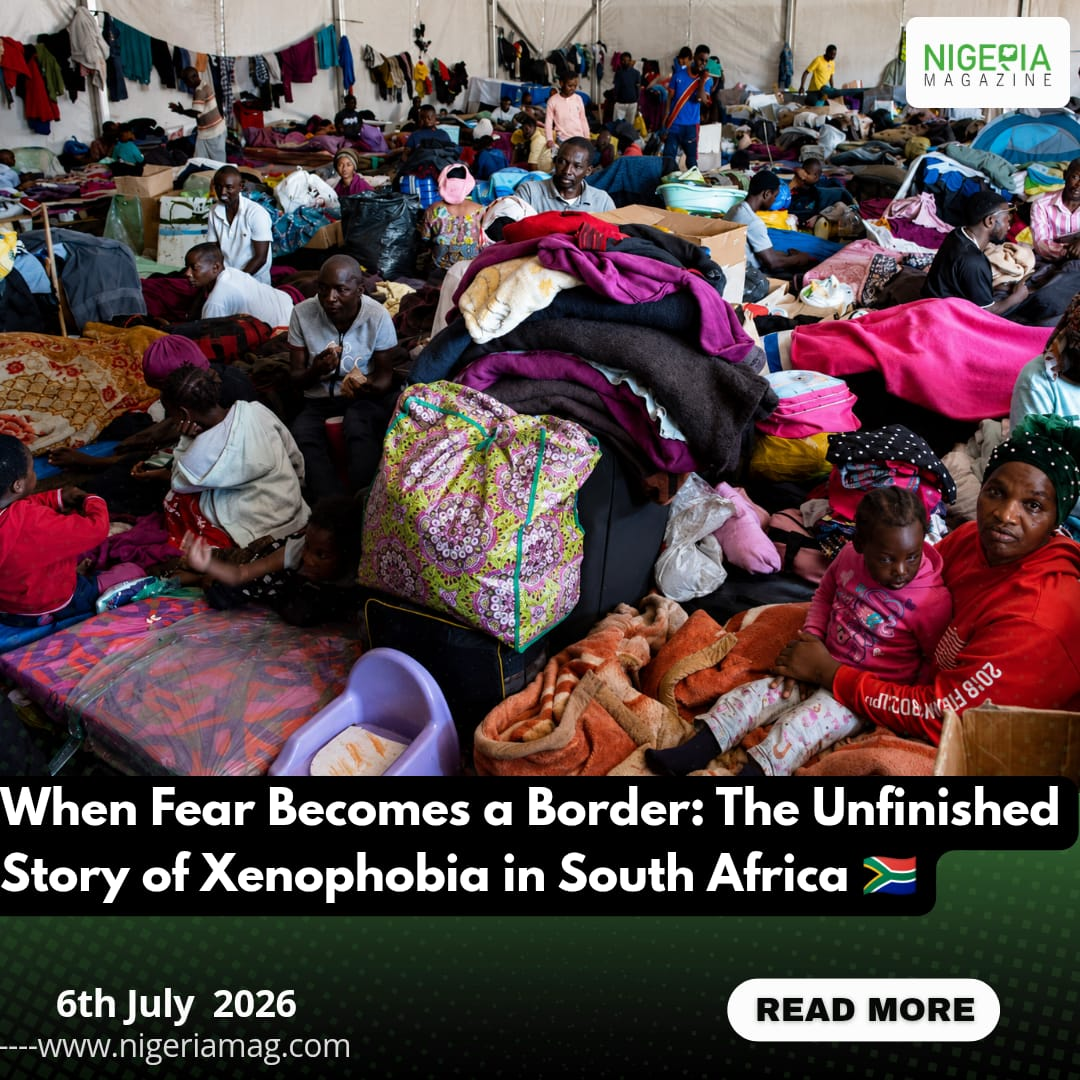
For decades, migrants from countries such as Nigeria, Zimbabwe, Mozambique, Ethiopia, Somalia, Malawi, and the Democratic Republic of Congo have travelled to South Africa in search of opportunities. Some arrive to study, others to establish businesses, while many simply seek safety from political instability or economic hardship in their home countries. Instead of finding acceptance, however, many have encountered hostility, discrimination, and, in the worst cases, deadly violence.
Xenophobia in South Africa is not a new phenomenon. It has resurfaced repeatedly over the years, leaving behind shattered families, destroyed businesses, and strained diplomatic relations across the continent. Images of looted shops, burning buildings, and frightened migrants fleeing for their lives have become all too familiar. These incidents spark outrage across Africa before gradually fading from international headlines—until the next outbreak occurs.
One of the biggest questions often asked is: Why does this keep happening?
The answer is far more complicated than simple hatred. South Africa faces serious socio-economic challenges. High unemployment, especially among young people, rising inflation, unequal access to basic services, and widespread poverty have created frustration within many communities. In difficult times, migrants are often unfairly blamed for taking jobs, increasing crime, or placing pressure on public services. While these accusations frequently lack evidence, they become easy narratives in communities already struggling with hardship.
Political rhetoric has also played a role. At various moments, certain political figures and community leaders have made statements suggesting that foreign nationals are responsible for South Africa’s economic difficulties. Such remarks may appeal to frustrated citizens, but they also deepen division and reinforce dangerous stereotypes. When influential voices frame migrants as the problem, hostility can spread quickly.
Social media has further complicated the situation. Rumours, misinformation, and manipulated videos often circulate rapidly, creating panic and anger before facts can be verified. A single false claim can fuel violence within hours, especially in communities already experiencing tension. While digital platforms have helped expose acts of violence and attract global attention, they have also become channels through which prejudice is amplified.
Ironically, South Africa’s history should make it one of the strongest defenders of African solidarity. During the anti-apartheid struggle, many African nations—including Nigeria—provided financial support, diplomatic backing, scholarships, and refuge to South African activists. Nigeria, in particular, invested enormous resources in supporting the liberation movement, earning widespread recognition as one of apartheid’s strongest international opponents.
This historical relationship makes xenophobic attacks especially painful for many Africans. For citizens of countries that once stood firmly beside South Africa during its darkest years, the violence feels like a betrayal of shared history and continental brotherhood.
The economic contribution of migrants is another aspect that is often overlooked. Across South Africa, foreign-owned businesses create jobs, supply goods to underserved communities, and contribute to local economies. Many migrants work in sectors where labour shortages exist, while others become entrepreneurs whose businesses support both South Africans and fellow migrants. Far from weakening the economy, many contribute to its growth despite facing enormous challenges.
Nevertheless, tensions remain because economic realities cannot be ignored. Competition over limited employment opportunities, housing shortages, and inadequate public services naturally creates frustration. The real issue, however, is not the presence of migrants but the structural problems that governments have struggled to resolve over many years. Blaming vulnerable communities may offer temporary political convenience, but it does little to address unemployment, inequality, or poor governance.
The psychological impact of xenophobia is equally devastating. Many migrants live in constant fear, unsure whether their businesses will survive another attack or whether their families will be safe. Children grow up witnessing violence based solely on nationality, creating trauma that can last a lifetime. Even those who have lived in South Africa for decades often feel they must continually prove they belong.
Beyond South Africa’s borders, xenophobia also affects diplomacy and regional cooperation. Every major attack generates criticism from neighbouring countries and often prompts governments to issue travel advisories or demand stronger protections for their citizens. These tensions undermine the vision of African integration promoted by institutions such as the African Union and the African Continental Free Trade Area, both of which depend on trust, cooperation, and the free movement of people and commerce.
Fortunately, xenophobia does not represent the views of every South African. Many citizens have courageously defended migrants during attacks, provided shelter to displaced families, and publicly condemned violence. Religious organisations, civil society groups, youth movements, and community leaders have organised campaigns promoting tolerance, dialogue, and peaceful coexistence. These voices remind the world that compassion still outweighs hatred in many communities.
Education also has an important role to play. Teaching young people about African history, migration, and shared cultural identity can help dismantle harmful stereotypes before they become deeply rooted. Schools, universities, and media organisations all have a responsibility to encourage critical thinking rather than prejudice.
Governments across Africa must also work together to improve migration policies, strengthen law enforcement against hate crimes, and promote economic development that reduces the pressures forcing people to leave their home countries. At the same time, South African authorities must consistently ensure that perpetrators of xenophobic violence are held accountable. Justice not only punishes offenders but also sends a clear message that violence against any person, regardless of nationality, will not be tolerated.
The media carries its own responsibility. Sensational reporting can inflame tensions, while responsible journalism can provide context, challenge misinformation, and humanise those affected. Behind every headline about xenophobia is a real person—a shop owner who invested life savings into a small business, a student pursuing education, a parent working to provide for a family, or a child simply hoping to grow up in peace.
Ultimately, xenophobia is not merely a South African issue. It is an African issue because it challenges the continent’s commitment to unity, shared prosperity, and mutual respect. If Africans cannot safely live, work, and build businesses within Africa, then the dream of continental integration remains incomplete.
The future depends not on walls of suspicion but on bridges of understanding. South Africa’s remarkable journey from apartheid to democracy proved that reconciliation is possible even after unimaginable injustice. That same spirit of reconciliation is needed today—not between races, but among Africans themselves.
History will not judge nations solely by their economic achievements or political influence. It will also judge how they treated the vulnerable, welcomed strangers, and upheld the dignity of every human being. The fight against xenophobia is therefore not simply about protecting migrants. It is about protecting the very ideals of humanity, justice, and African solidarity that should unite the continent for generations to come.

