


By James Gbadamosi
For decades, the path to financial success in Nigeria followed a familiar formula.
Get a degree.
Find a good job.
Work your way up the corporate ladder.
Build a stable career.
Today, that formula is being challenged by a new generation of wealth creators.
Across Nigeria, thousands of young professionals are building significant income streams outside traditional employment through content creation, consulting, digital products, technology startups, personal brands, and online businesses.
What makes this shift remarkable is not just the amount of money being generated, but the way it is being generated.
The barriers to wealth creation have changed.
A laptop, smartphone, internet connection, and valuable skill can now create opportunities that previously required large amounts of capital.
Content creators are monetising audiences through brand partnerships, digital products, courses, and communities.
Consultants are leveraging expertise to serve clients across multiple countries.
Software developers are building products for global markets.
Startup founders are creating businesses capable of reaching millions of users.
Even professionals who maintain full-time jobs are increasingly building side businesses that generate substantial additional income.
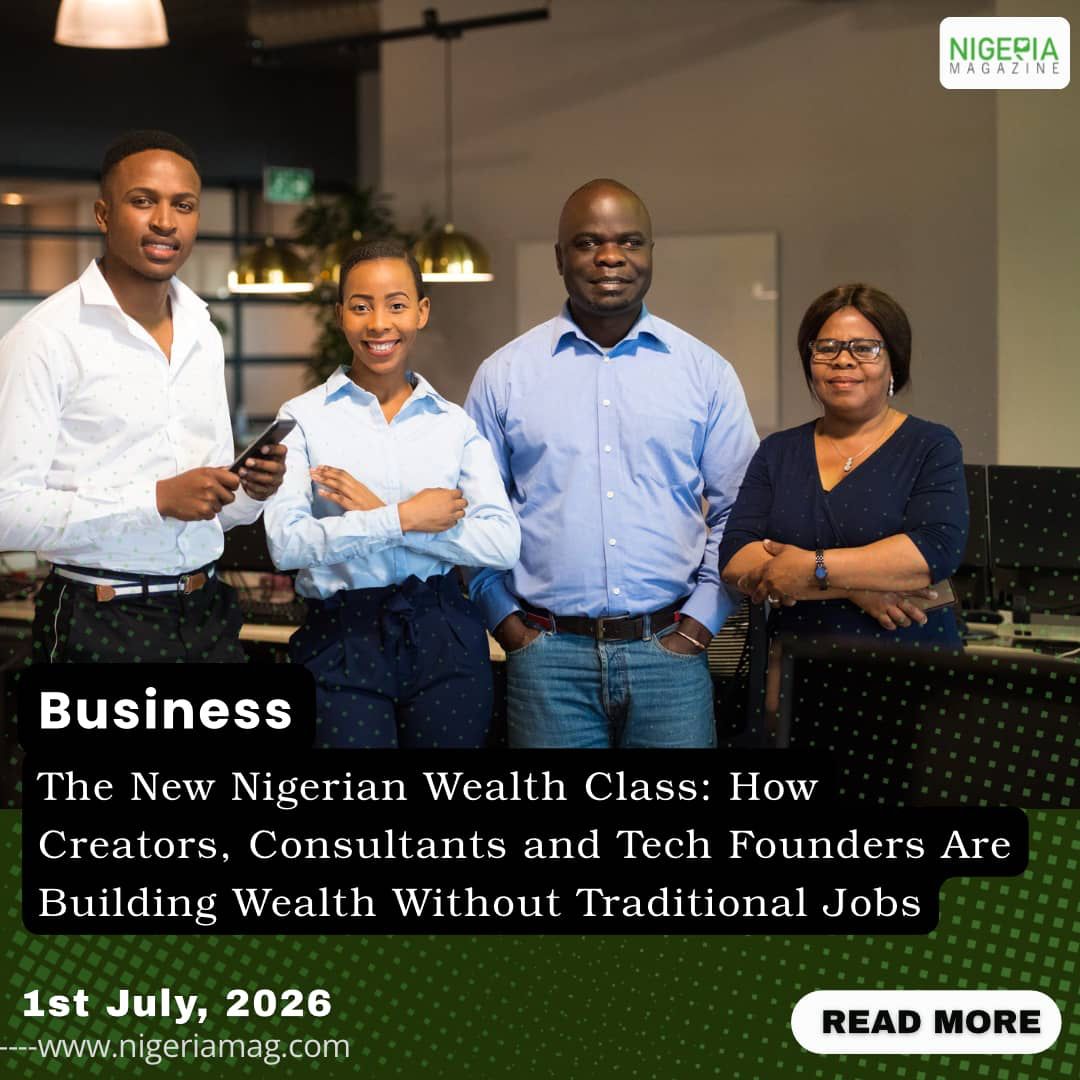
This trend is producing what many observers describe as a new Nigerian wealth class.
Unlike previous generations whose wealth often came from traditional sectors such as oil, banking, real estate, or government contracts, this emerging class is largely powered by knowledge, technology, and digital distribution.
Social media has accelerated the shift.
Platforms like LinkedIn, X, Instagram, YouTube, and TikTok have become economic infrastructure.
A strong personal brand can attract clients, partnerships, speaking engagements, consulting opportunities, and business deals.
Influence has become a commercial asset.
The rise of artificial intelligence is further expanding opportunities.
Entrepreneurs are using AI to launch businesses faster, automate operations, create content, and serve customers more efficiently than ever before.
As a result, individuals can now build scalable businesses with smaller teams and lower costs.
Yet this new wealth landscape comes with challenges.
Competition is intense.
Attention spans are shorter.
Markets change rapidly.
Success often requires continuous learning, adaptability, and resilience.
Unlike traditional careers that offer predictable progression, entrepreneurship and creator-driven businesses demand constant reinvention.
Despite these challenges, the momentum is undeniable.
Across Lagos, Abuja, Port Harcourt, Benin City, Ibadan, Enugu, and beyond, a generation of Nigerians is redefining what success looks like.
They are proving that wealth creation is no longer limited to boardrooms, government contracts, or inherited advantages.
The next wave of Nigerian millionaires may not come from oil fields or banking halls.
They may emerge from YouTube channels, consulting firms, software startups, online communities, and personal brands built on expertise and execution.
The future of wealth in Nigeria is becoming increasingly digital, entrepreneurial, and decentralised.
And for those willing to adapt, the opportunities have never been greater.

