


2025 will be remembered as a year of reckoning and re-imagination for Nigeria — a year when pressure met possibility, and when the country’s contradictions were on full display. From hard political choices and economic strain to cultural triumphs and digital leaps, Nigeria spent the year negotiating its future in real time. What emerged was not a neat resolution, but a clearer sense of direction: restless, contested, and unmistakably Nigerian.
Politics & Governance: Between Reform and Resistance
By 2025, the aftershocks of earlier policy reforms were still shaping daily life. Government decisions around fiscal discipline, subsidy removals, currency reforms, and public-sector restructuring continued to dominate national debate. While officials framed these measures as necessary steps toward long-term stability, many Nigerians experienced them through rising living costs, labor agitation, and renewed demands for accountability.
Across the year, civic engagement intensified. Organized labor flexed its muscles through negotiations and protests, civil society groups pushed transparency and social protection to the forefront, and young Nigerians—many politically awakened over the last half-decade—used both streets and screens to make their voices heard. The political conversation increasingly shifted from personalities to performance: governance outcomes, not slogans, became the metric citizens demanded.
Security remained a central concern. Though efforts at intelligence coordination and community-based responses showed pockets of progress, insecurity in parts of the country continued to shape migration patterns, food production, and public confidence. In 2025, security was no longer discussed only as a military challenge, but as an economic and social one tied to jobs, justice, and trust in institutions.
The Economy: Survival, Adaptation, and Reinvention
For most Nigerians, 2025 was an economic endurance test. Inflation pressures, cost-of-living concerns, and currency volatility forced households and businesses to adapt quickly. Yet within this strain emerged a familiar Nigerian response: improvisation.
Small businesses digitized faster, informal trade reorganized through social platforms, and local manufacturing conversations gained urgency. There was renewed national focus on food security, local production, and value chains — not as abstract policy ideas, but as survival imperatives.
Diaspora remittances, long a quiet stabilizer, remained crucial, while conversations around taxation, social safety nets, and public spending transparency grew louder. By year’s end, the economy had not fully stabilized, but Nigerians had recalibrated — learning, again, how to live through uncertainty while demanding better.
Culture: Nigeria’s Soft Power Year
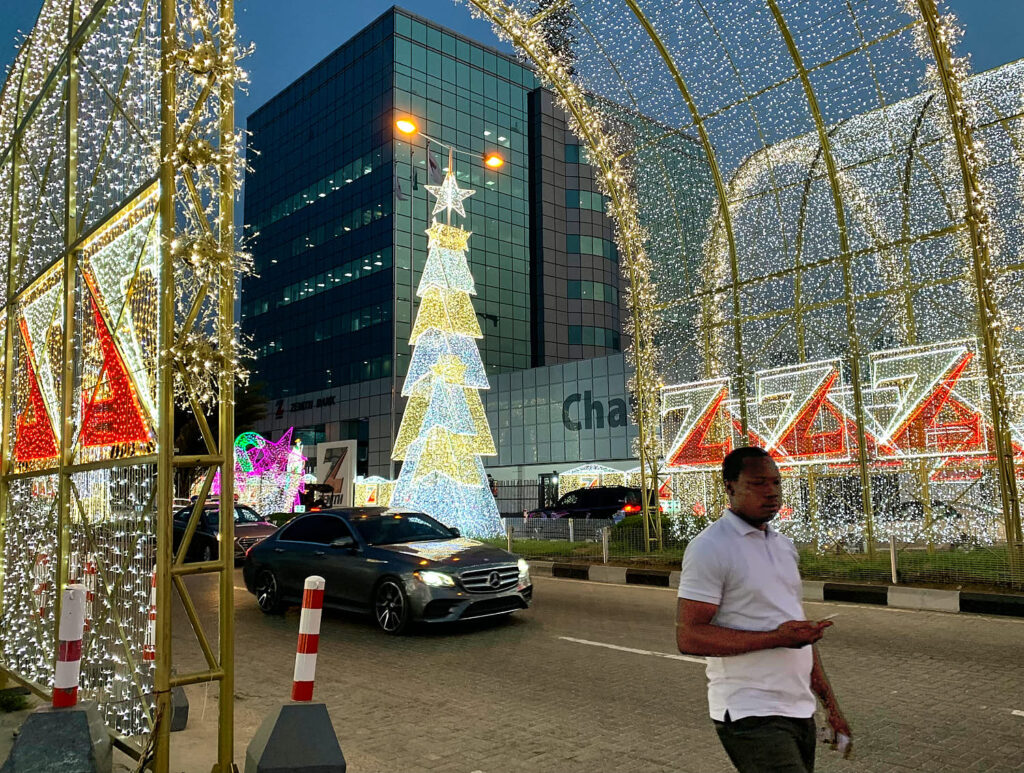
If politics tested Nigeria’s patience, culture reaffirmed its confidence. Nigerian music, film, fashion, and digital creativity continued to dominate global conversations in 2025. Afrobeats artists sold out arenas, topped international charts, and turned cultural influence into economic leverage. Nollywood expanded its reach through global streaming platforms, refining both craft and commercial ambition.
Beyond entertainment, Nigerian culture became a form of diplomacy. From fashion weeks to literary festivals, the world consumed Nigerian stories not as curiosities, but as mainstream narratives. Inside the country, cultural spaces doubled as sites of resistance, healing, and expression — where humor, satire, and art responded to national realities faster than official statements ever could.
Social media remained Nigeria’s loudest town square. Memes, skits, citizen journalism, and digital activism shaped narratives in real time, reminding power holders that public opinion in 2025 was decentralized, fast-moving, and impossible to ignore.
Technology & Innovation: Building Through Constraints
Nigeria’s tech ecosystem in 2025 was leaner, more cautious, and more grounded. After years of exuberant growth, startups focused on sustainability over hype. Fintechs deepened financial inclusion while navigating tighter regulations. Health tech, agritech, and logistics startups gained relevance as practical problem-solvers rather than venture darlings.
Artificial intelligence entered mainstream conversation — not as science fiction, but as a tool for education, media, customer service, and small business efficiency. Young Nigerians experimented boldly, even as debates about data protection, digital rights, and job displacement gained momentum.
Despite infrastructure gaps and power challenges, innovation persisted. The story of Nigerian tech in 2025 was not unicorns, but resilience: building with fewer resources, sharper focus, and clearer social purpose.
Sports: Pride Beyond the Podium
Sports continued to serve as one of Nigeria’s most unifying forces. Whether through football qualifiers, athletics meets, or continental tournaments, Nigerian athletes carried national pride onto global stages. The Super Eagles and Super Falcons remained symbols of hope, while individual athletes reminded the world of Nigeria’s depth of talent.
Women’s sports gained increased attention and advocacy, with louder calls for equity in funding, coverage, and administration. Grassroots sports conversations also resurfaced, linking youth development to national health, employment, and social cohesion.
In a difficult year, sports offered Nigerians moments of collective joy — brief, powerful reminders of what unity can feel like.
The People: The Year Nigeria Looked at Itself
Perhaps the defining story of Nigeria in 2025 was not any single event, but a national mood.
Nigerians questioned leadership more openly, challenged systems more creatively, and leaned on one another more intentionally. Mutual aid, community initiatives, and digital solidarity filled gaps where institutions fell short.
Faith spaces, comedy, online communities, and everyday resilience carried people through. The popular question of the year was no longer just “How far?” but “What next?”
A Nation Still Becoming
Nigeria did not “arrive” in 2025 — but it revealed itself more honestly. The year exposed structural weaknesses, tested social contracts, and demanded sacrifice. Yet it also showcased imagination, cultural dominance, and an unbreakable belief in possibility.
Nigeria in 2025 was noisy, complicated, tired, brilliant, frustrated, and hopeful — sometimes all at once. And as the year closed, one truth remained clear: the Nigerian story is still being written, and its most consequential chapters may be yet to come.

