


By Anuoluwapo Oyeniran
The future of Africa’s economic transformation may depend not only on how much wealth the continent creates, but on who owns it, finances it and benefits from it.
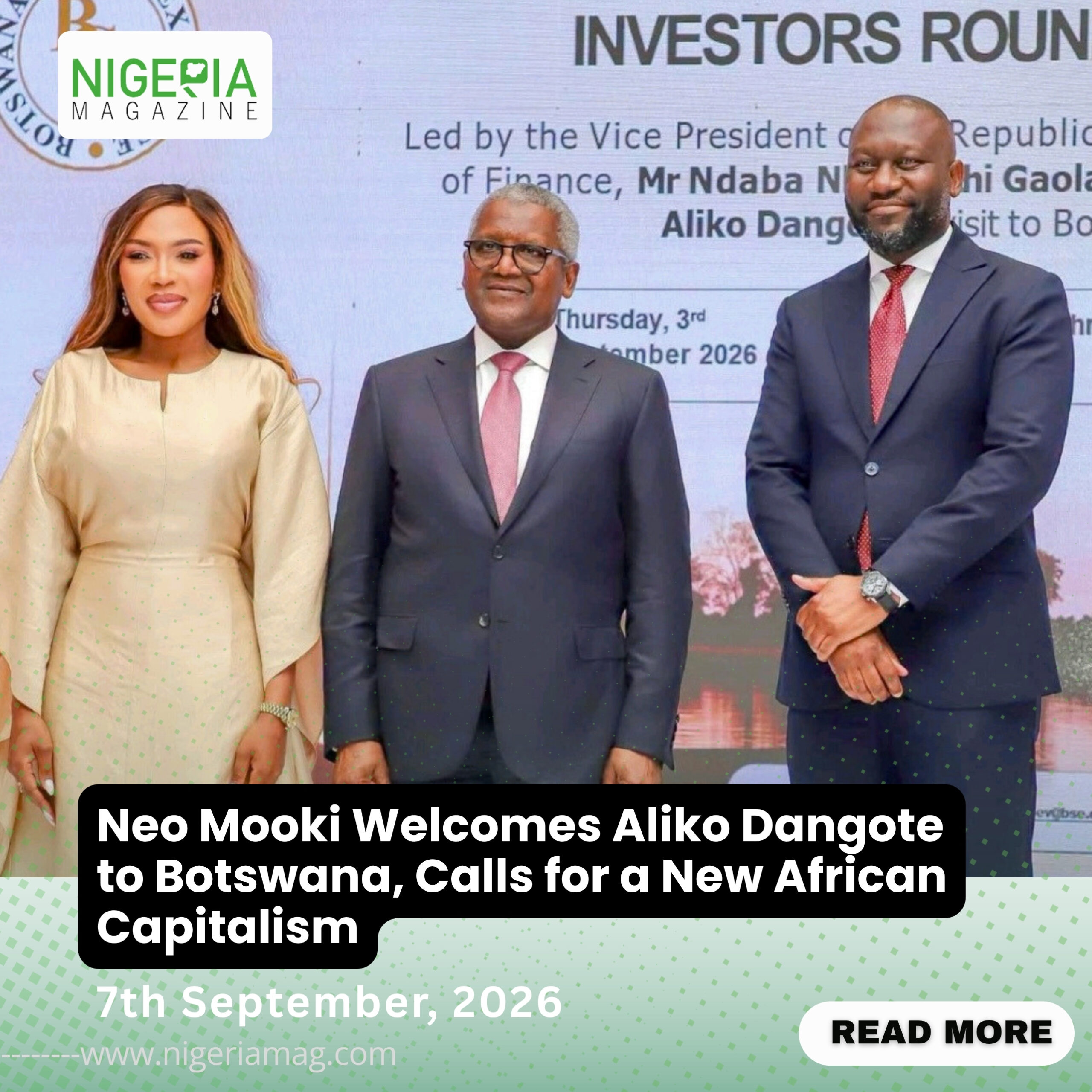
This was at the heart of a recent high-level engagement between Botswana Stock Exchange Chairperson Neo Mooki and Nigerian industrialist and Dangote Group founder Aliko Dangote, who visited Botswana for discussions around investment, capital markets and Africa’s economic future.
Mooki described Dangote’s visit as more than a ceremonial engagement. According to her, the discussions focused on how Botswana and other African markets can play a meaningful role in financing African businesses and expanding African ownership of major enterprises. ([LinkedIn][1])
The engagement included meetings with Botswana’s President Duma Boko, Vice President and Minister of Finance Ndaba Gaolathe, business leaders, institutional investors and capital-market stakeholders.
At the centre of the discussions was the potential role of Botswana’s capital market in supporting Dangote’s expansion across Southern Africa and enabling African investors to participate in the next phase of his business growth.
Rethinking Capitalism in Africa
For Mooki, the conversation goes beyond Dangote and his business empire. It speaks to a larger question about the kind of economic system Africa wants to build.
Africa has often been described as a continent lacking sufficient capital. But Mooki has challenged that narrative, arguing that significant pools of African capital already exist in pension funds, insurance companies, banks and other financial institutions.
At a recent African investment conference, she pointed out that Botswana alone has billions of dollars sitting in bank deposits, while trillions of dollars circulate across Africa’s financial system. The challenge, she argued, is connecting that capital to productive businesses and large-scale projects. ([Moneyweb][2])
This creates an opportunity for what could be described as a more African-centred capitalism—one where African savings are increasingly invested in African companies, industries and infrastructure.
From African Resources to African Ownership
Mooki believes the continent must move beyond simply hosting economic activity to ensuring that Africans have meaningful ownership of the wealth being created.
That means strengthening African stock exchanges, encouraging institutional investors to invest locally, creating opportunities for ordinary citizens to own shares in major companies and building financial systems capable of supporting businesses as they grow.
The proposed initial public offering of the Dangote Petroleum Refinery provides a significant example of this possibility. The refinery is reportedly preparing for a major IPO, with the Nigerian Exchange expected to play a central role. The potential listing has also generated interest from other African capital markets, including Botswana. ([LinkedIn][1])
If successful, such a listing could allow African institutional and retail investors to participate directly in the ownership of one of the continent’s most significant industrial projects.
What Dangote Represents
Dangote’s presence in the conversation is significant because his career illustrates what African-owned industrial ambition can achieve.
The Dangote Group has built businesses across sectors including cement, food manufacturing, fertiliser and petroleum refining. His Lagos refinery has also become a major example in discussions about financing large-scale African infrastructure and industrial projects. ([Moneyweb][2])
For Mooki, however, the bigger lesson is not simply that one African billionaire has built a successful business.
It is that Africa needs systems capable of helping more African entrepreneurs build, scale and retain ownership of globally competitive companies.
Africa Does Not Have to Wait for the Future
Mooki’s message is ultimately one of confidence in Africa.
Rather than viewing the continent as a destination waiting for foreign capital to solve its problems, she believes Africa should increasingly mobilise the wealth, talent, savings and entrepreneurial capacity that already exist within the continent.
Her broader argument is that Africa is not necessarily poor; much of its wealth remains underdeveloped, underfinanced or insufficiently connected to formal investment markets. ([LinkedIn][3])
The question, therefore, is not simply how can Africa attract more capital?
It is also:
How can Africa ensure that its own capital finances its own transformation?
The meeting between Neo Mooki and Aliko Dangote offers a glimpse of what that future could look like—African governments creating enabling environments, African capital markets mobilising domestic savings, African investors funding African businesses and African entrepreneurs building industries capable of competing globally.
As Mooki suggested following Dangote’s visit, the real measure of such engagements will not be photographs or speeches, but the capital committed, industries strengthened, jobs created and ownership opportunities opened for future generations. ([LinkedIn][1])
For Africa, the next chapter of capitalism may not be about importing solutions from elsewhere.
It may be about building, financing and owning the future from within the continent.

