


By Moses Chibuike Ezechukwu
Technical and Vocational Education and Training (TIVETs) are increasingly being recognised as a practical pathway to economic empowerment, youth employment, and national development in Nigeria.
This article explores how skills-based education can reshape productivity, reduce unemployment, and strengthen the country’s economic future.
Across Nigeria today, one of the most pressing conversations is not just about economic growth, but about the kind of growth that actually creates opportunities for everyday people. While universities continue to produce graduates year after year, the labour market tells a different story—one of limited jobs, rising unemployment, and growing frustration among young people.
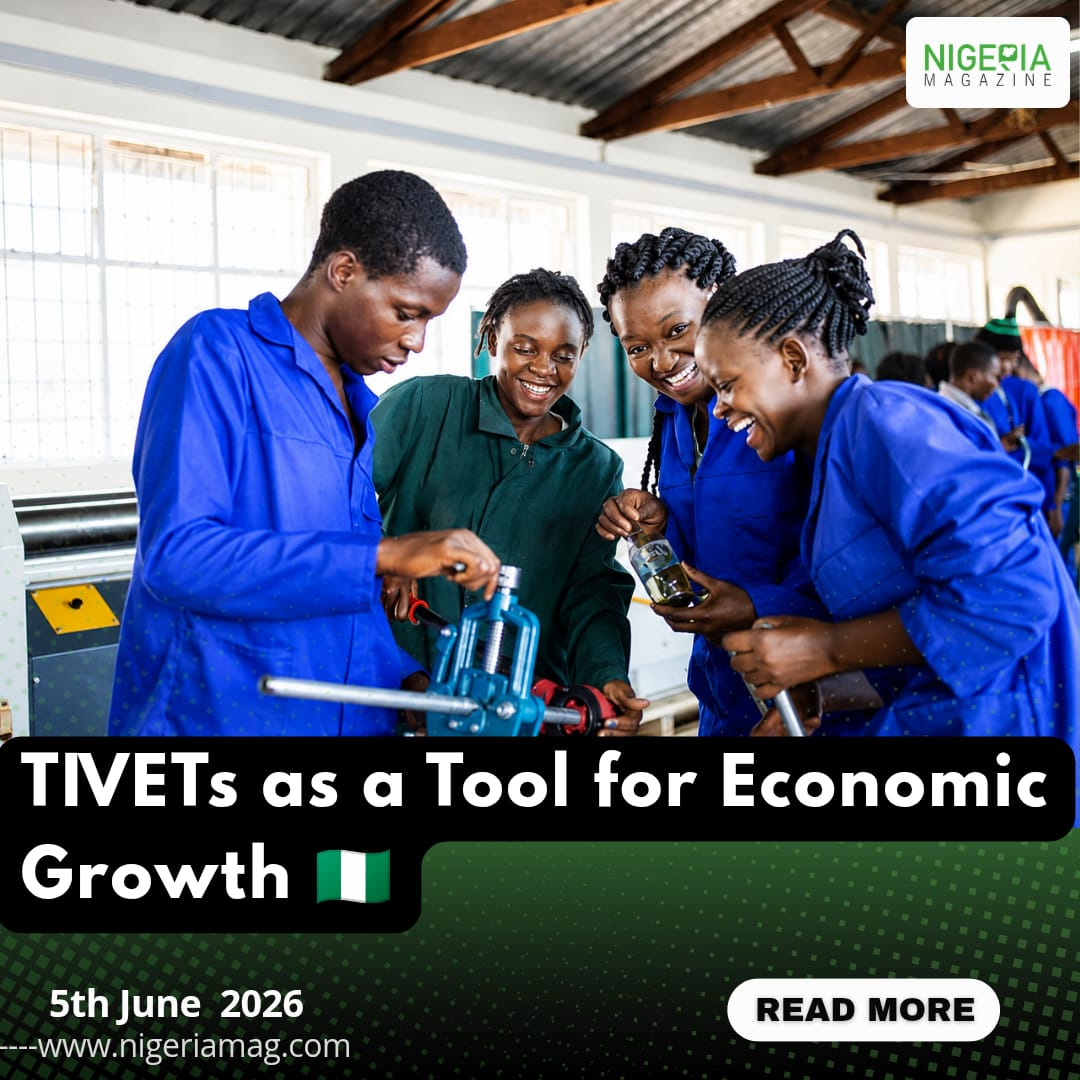
In the middle of this challenge lies a powerful but often underutilised solution: Technical and Vocational Education and Training, commonly known as TIVETs. These institutions and programmes focus on practical skills—skills that directly translate into employment, entrepreneurship, and productivity.
For a country like Nigeria, where the youth population is one of the largest in the world, TIVETs are not just an alternative form of education; they are an economic necessity.
The Skills Gap Problem
Nigeria’s economy has long struggled with a mismatch between education and labour market needs. Many graduates leave school with theoretical knowledge but lack the practical abilities required in industries such as manufacturing, construction, agriculture, energy, and technology.
This gap has created a paradox: employers complain about a shortage of skilled workers, while millions of young people remain unemployed or underemployed. TIVETs sit directly in the middle of this gap, offering training that aligns with real-world demand.
From electrical installation and welding to digital design, automobile repair, fashion design, catering, and agricultural technology, vocational training equips learners with immediately usable skills. In economic terms, this is not just education—it is workforce development.
TIVETs and Youth Employment
One of the strongest arguments for expanding TIVETs in Nigeria is their direct impact on youth employment. Unlike traditional academic routes that often depend on formal job recruitment processes, vocational skills allow individuals to create their own opportunities.
A young person trained in plumbing or solar panel installation, for example, does not need to wait for a corporate job offer. They can begin servicing homes, construction sites, or small businesses almost immediately. Similarly, someone trained in tailoring, hairdressing, or graphic design can build a personal brand and attract clients through local demand and digital platforms.
This shift from job-seeking to job-creating is crucial in an economy where formal employment cannot absorb the growing youth population.
Entrepreneurship and Small Business Growth
Nigeria’s economy is heavily driven by small and medium-scale enterprises (SMEs), and TIVETs play a key role in sustaining this sector. Vocational training encourages entrepreneurship by equipping individuals with both technical and business skills.
A trained carpenter can establish a workshop. A welder can take on contracts for construction companies. A fashion designer can launch a clothing brand. Even in agriculture, vocational training in modern farming techniques can turn small plots of land into productive agribusiness ventures.
These small enterprises collectively contribute to GDP growth, create jobs for others, and stimulate local economies. In many cases, they also reduce dependence on imported goods by promoting local production.
Industrialisation and National Development
No country achieves meaningful industrialisation without a strong technical workforce. Factories, manufacturing plants, energy companies, and infrastructure projects all depend on skilled technicians and artisans.
Countries that have successfully industrialised, such as Germany and South Korea, invested heavily in vocational education systems that are respected, structured, and closely linked to industry needs. Nigeria can draw lessons from this model.
With proper investment, TIVETs can supply the engineers, technicians, and skilled labour required for large-scale industrial projects. This would not only reduce unemployment but also reduce Nigeria’s reliance on foreign expertise for basic and advanced technical work.
Changing the Perception of Vocational Education
Despite its importance, vocational education in Nigeria still suffers from perception problems. Many people view it as a “second choice” for those who cannot enter university. This mindset has limited its potential and discouraged many young people from considering it seriously.
However, the reality is changing. With the rise of technology, automation, and creative industries, skills-based work is becoming more valuable than ever. A skilled technician or digital creator can earn just as much—or even more—than a university graduate in some fields.
There is a growing need to rebrand TIVETs as prestigious, modern, and future-focused. This requires awareness campaigns, policy support, and success stories that highlight individuals who have built successful careers through vocational training.
The Role of Government and Private Sector
For TIVETs to truly drive economic growth, both government and private sector involvement are essential. Governments must invest in infrastructure, equipment, and curriculum development. Many vocational training centres in Nigeria still operate with outdated tools, limiting the quality of training.
Policy reforms are also needed to ensure that vocational certifications are recognised and respected across industries. Incentives such as grants, startup support, and apprenticeship programmes can further encourage participation.
The private sector also has a major role to play. Companies can partner with training centres to design industry-relevant programmes, offer internships, and absorb skilled graduates into the workforce. This collaboration ensures that training is aligned with actual market demand.
Digital Skills and the Future of TIVETs
In today’s world, vocational education is no longer limited to physical trades. Digital skills have become a major component of modern TIVETs. Areas such as web development, digital marketing, cybersecurity, animation, and data analysis are now part of vocational training ecosystems worldwide.
For Nigeria, this presents a huge opportunity. With a young, tech-savvy population, digital vocational training can open doors to global remote work opportunities. A trained software developer in Lagos, for example, can work for a company in Europe or North America without leaving the country.
This global accessibility makes TIVETs even more powerful as a tool for economic transformation.
TIVETs represent more than an educational pathway—they represent a strategy for national development. In a country facing high unemployment, rising poverty, and economic uncertainty, skills-based education offers a practical and immediate solution.
By investing in vocational training, Nigeria can unlock the potential of its youth, strengthen its industrial base, and build a more self-reliant economy. The future of economic growth may not lie solely in lecture halls, but in workshops, training centres, and innovation hubs where skills are turned into productivity.
If properly supported and reimagined, TIVETs could become one of the strongest pillars of Nigeria’s economic transformation.

