


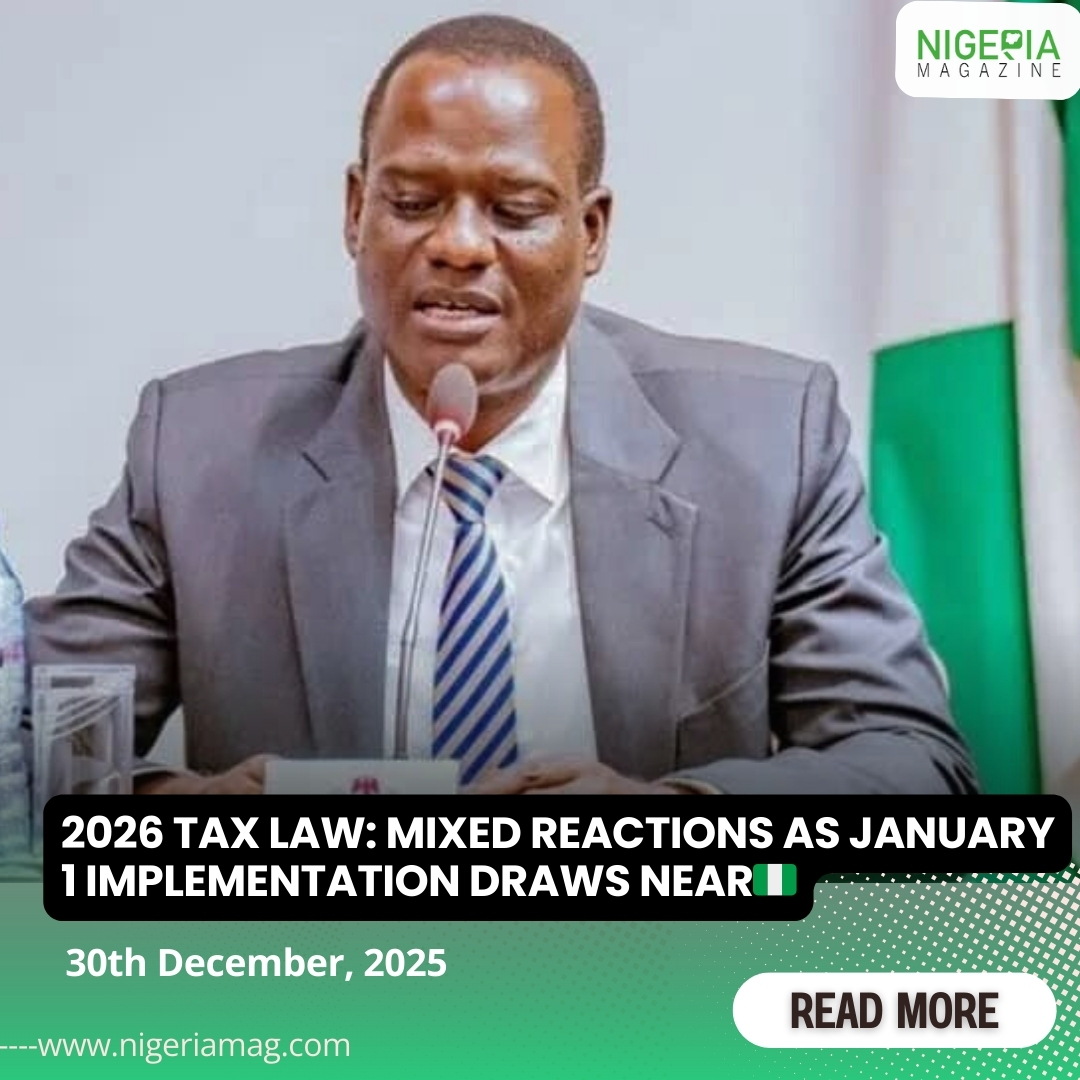
As Nigeria counts down to January 1, 2026, the planned implementation of a new national tax law is generating widespread debate, concern, and cautious optimism across the country. From market stalls to corporate offices, Nigerians are beginning to ask critical questions about what the new law entails and how it will affect their livelihoods in an already challenging economic environment.
The Federal Government says the 2026 tax law is aimed at simplifying Nigeria’s complex tax system, widening the tax net, improving compliance, and boosting government revenue for national development.

However, as the implementation date approaches, many citizens say they still lack adequate information about the policy, raising concerns about public awareness, fairness, and trust.
Public Awareness Remains Low
A walk through several parts of Abuja reveals a mixed level of awareness among residents. While some Nigerians have heard bits and pieces about the new tax law through the media or social discussions, many admit they do not fully understand its provisions or implications.
Speaking to Nigeria Magazine, Badamasi Abdullahi a street trader said:
“I have heard something about a new tax law coming next year, but nobody has really explained what it means for small traders like us,” said a petty trader who sells household items in the city. “With the way prices are going up, any new tax will be very difficult for us.”
Bola Olu a civil servant expressed concern that the law could place additional financial pressure on workers and small business owners who are already struggling with inflation and rising cost of living.

“Before bringing new taxes, the government should first make life easier for people,” he said.
Hope for Better Governance
Despite the concerns,
Some Nigerians believe the new tax law could be beneficial, if properly implemented. According to them, effective taxation has the potential to improve public services and infrastructure, provided funds are managed transparently.
“If the tax system is fair and the money is used well, people will be more willing to comply,” a civil servant noted. “The problem has always been accountability. Nigerians want to see results.”
This sentiment reflects a broader national conversation about governance, transparency, and the social contract between citizens and the state.
Many believe that trust will play a critical role in determining whether the new tax law succeeds or fails.
Expert Insight on the New Law
Speaking to Nigeria Magazine, Abdul Rahman a tax expert explained that the 2026 tax law is designed to address long-standing challenges within Nigeria’s tax system.
According to the expert, the law seeks to harmonise existing tax regulations, reduce multiple taxation, and make compliance easier for individuals and businesses.
“The intention is to simplify the system and ensure that everyone pays their fair share,” the expert explained.
“However, without adequate public education and stakeholder engagement, even the best policies can face resistance.”
The expert also emphasised that fairness and effective communication would be crucial.
“People need to understand not just what they are paying, but why they are paying it,” he added.
The Challenge Ahead
As January 1, 2026, draws closer, analysts warn that the success of the new tax law will depend largely on how well the government communicates its provisions to the public.
Stakeholders argue that extensive sensitisation campaigns, town hall meetings, and media engagement are necessary to bridge the information gap.
For many Nigerians, the key question remains whether the new law will ease the tax burden or deepen existing economic struggles. Until clearer details and assurances are provided, public opinion is likely to remain divided.
What is clear, however, is that taxation is no longer just a policy issue, it is a personal and national conversation touching on trust, accountability, and the future of governance in Nigeria.
By Ubong Usoro
Nigeria Magazine

