


From the Nigeria Magazine Desk
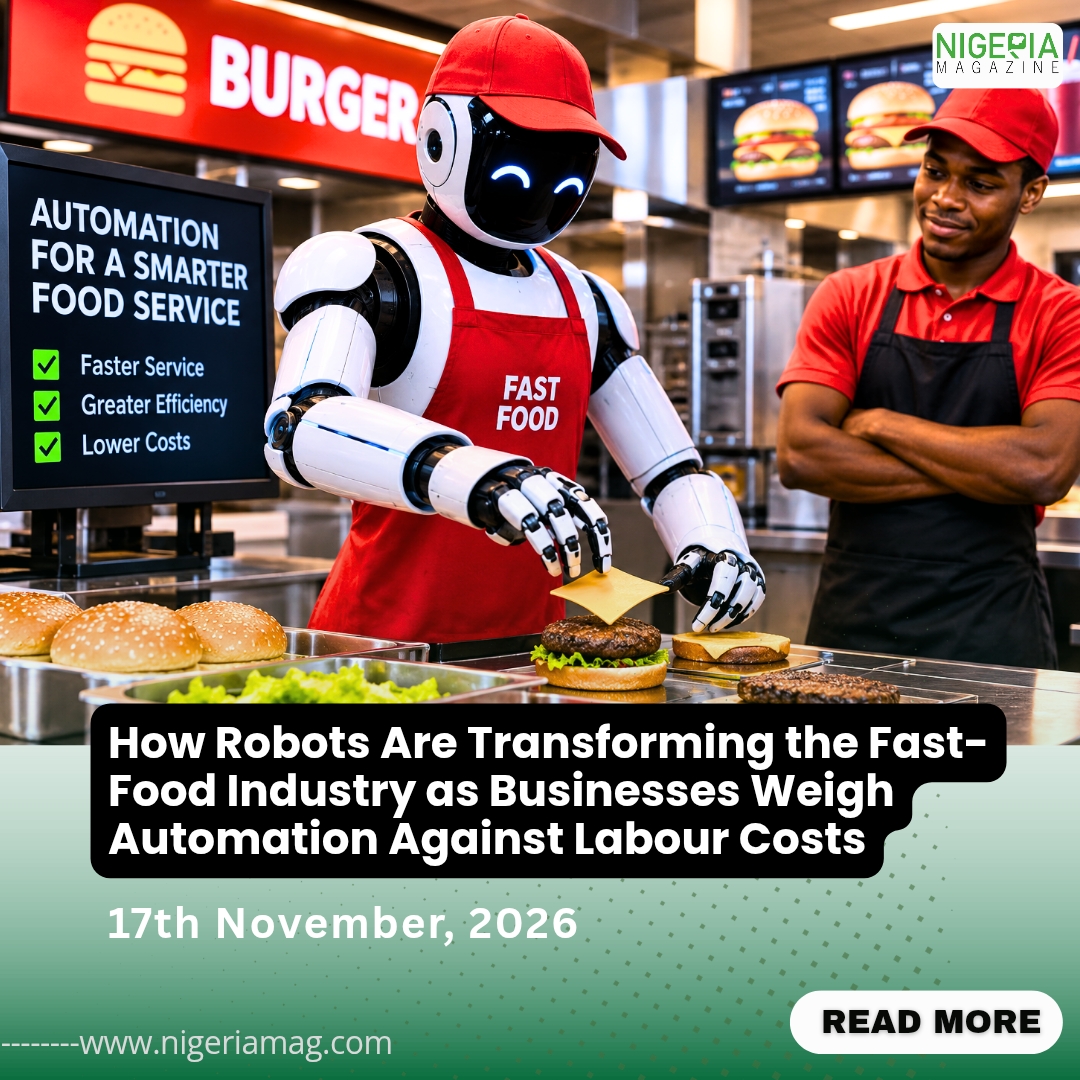
Robots are increasingly taking over repetitive tasks in the fast-food industry, with artificial intelligence-powered machines now capable of preparing burgers, frying food and handling other kitchen operations traditionally performed by human workers.
The development is raising important questions about the future of employment, business costs and the growing role of automation in the food service industry.
One example is Miso Robotics , a technology company known for developing robotic kitchen assistants, including Flippy, an AI-powered robot designed to automate food preparation tasks such as frying and grilling.
The technology is attracting attention as restaurants seek ways to improve efficiency, address staffing shortages and reduce the risks associated with certain kitchen operations.
However, automation comes with significant financial commitments. According to a recent LinkedIn post by technology commentator Max Gio, automated kitchen systems can cost between $100,000 and $300,000, alongside ongoing maintenance expenses and dependence on technology providers.
While employing human workers allows businesses to adjust staffing levels according to customer demand, investing in robots involves fixed costs that businesses must continue to manage even when sales decline.
Machines can also create operational challenges when they break down, potentially disrupting restaurant operations until repairs are completed. Unlike human workers, who can adapt to different responsibilities, robots are generally designed to perform specific tasks.
Gio argues that businesses should approach automation strategically rather than attempting to replace their entire workforce. He recommends automating operational bottlenecks where technology can deliver the greatest benefits while retaining human workers for tasks that require flexibility and adaptability.
The development reflects a broader transformation taking place across industries as artificial intelligence and robotics reshape traditional ways of working.
Although automation offers opportunities for increased productivity and efficiency, it also raises concerns about job displacement and the long-term impact on workers in industries that depend heavily on human labour.
As robotic technology continues to advance, businesses will increasingly have to balance the financial benefits of automation against the risks and responsibilities associated with replacing human workers.
The future of the fast-food industry may not be about choosing between humans and robots, but finding the right balance between technology, profitability and employment.
Source: Max Gio via LinkedIn.

