


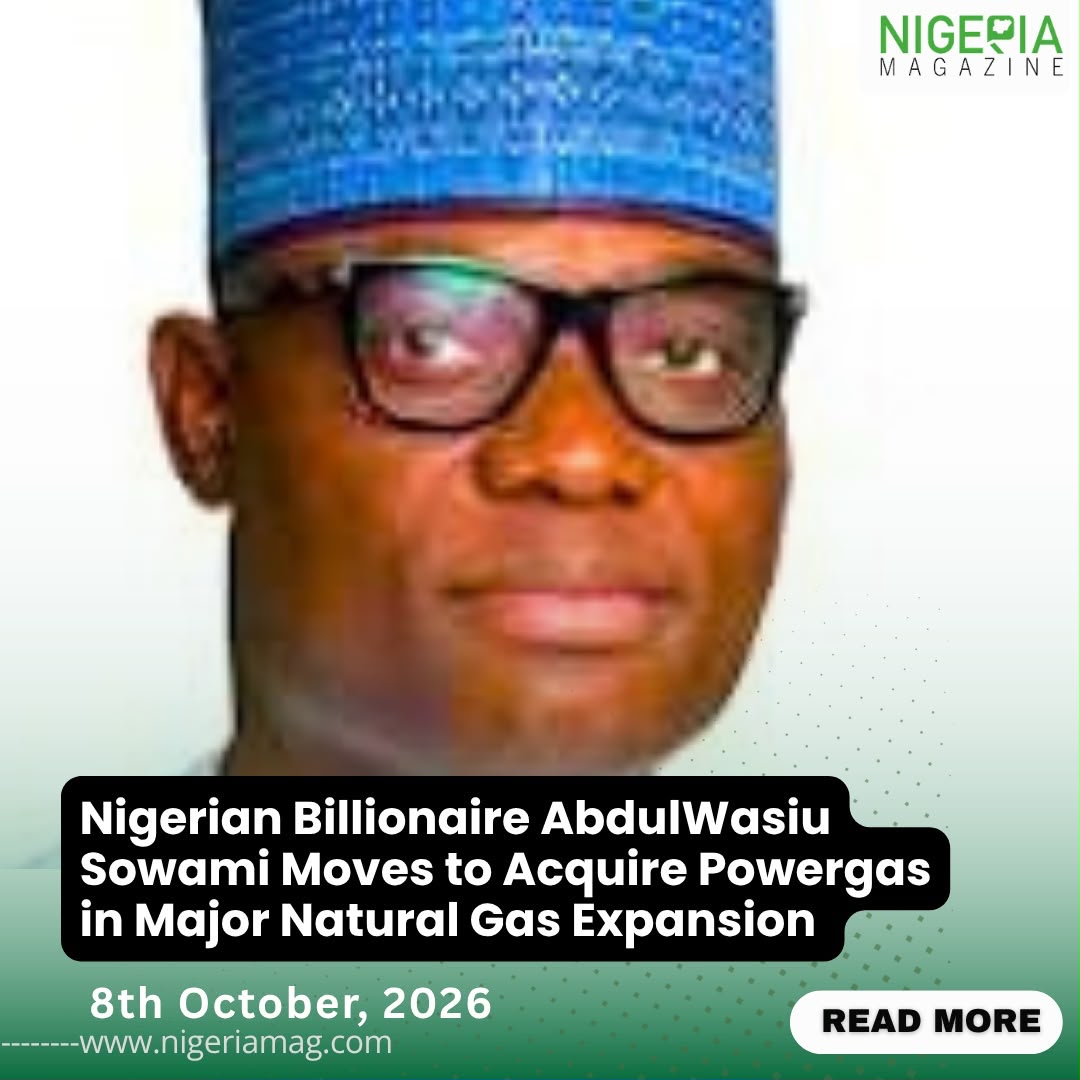
Seven years after acquiring Forte Oil from billionaire businessman Femi Otedola in a deal reportedly valued at $200 million, Nigerian energy entrepreneur AbdulWasiu Sowami is making another major move in the country’s energy industry.
His company, Ardova Plc, is leading a consortium alongside Diadem Energy to acquire a 100% stake in Powergas Global Investments Nigeria Limited and Powergas Ebedei Limited.
The acquisition, which remains subject to regulatory approvals and other closing conditions, would bring one of Africa’s major compressed natural gas (CNG) producers under Nigerian ownership.
The businesses are being acquired from A.P. Moller Capital’s Africa Infrastructure Fund I and Impala Energy Holdings. Although the financial value of the transaction has not been disclosed, the deal represents a significant expansion of Ardova’s operations beyond traditional petroleum products.
## From Forte Oil to Building an Energy Empire
Sowami’s journey into Nigeria’s downstream petroleum industry attracted widespread attention in 2019 when his company acquired Forte Oil from Femi Otedola.
The transaction marked a major change in ownership for one of Nigeria’s established petroleum marketing businesses.
Following the acquisition, Forte Oil was rebranded as Ardova Plc, with the company continuing to expand its presence across petroleum retail, distribution and other energy-related services.
Ardova has since developed a distribution network spanning more than 700 retail stations, giving it an extensive physical presence across Nigeria.
The proposed Powergas acquisition represents another step in Sowami’s strategy of expanding through established businesses and infrastructure rather than relying solely on building new operations from scratch.
This time, however, the focus is on natural gas.
## Why Powergas Is an Important Acquisition
Powergas is a major player in Nigeria’s compressed natural gas industry, supplying gas to industrial and commercial customers through a system commonly known as a virtual pipeline.
Unlike conventional gas pipelines, which require extensive fixed infrastructure, virtual pipelines transport compressed natural gas using specialised vehicles and storage equipment.
This allows businesses in locations without direct access to gas pipelines to receive natural gas for their operations.
Powergas operates four mother stations and more than 250 tube skids used in gas transportation and distribution.
Its Ebedei facility also processes gas that might otherwise be flared, helping convert an underutilised energy resource into a commercially valuable product.
For Ardova, acquiring Powergas would provide access to established CNG infrastructure, technical expertise and an existing customer base.
When combined with Ardova’s retail and logistics network, these assets could significantly strengthen the company’s position in Nigeria’s natural gas market.
## Ardova Targets 100 CNG Refuelling Stations
One of the most ambitious aspects of Ardova’s expansion strategy is its plan to establish 100 dedicated CNG refuelling locations within 24 months.
The company intends to leverage its existing retail network to support the rollout.
This could reduce some of the challenges associated with developing entirely new locations, although converting or expanding existing stations would still require investment in equipment, safety systems and regulatory compliance.
The planned expansion comes as Nigeria continues to promote compressed natural gas as an alternative to petrol and diesel, particularly for commercial transportation and industrial operations.
For businesses operating large vehicle fleets, fuel represents a significant operating expense.
CNG can offer cost advantages over conventional fuels under suitable market conditions, although the savings depend on gas prices, vehicle conversion costs, infrastructure availability and maintenance requirements.
By combining Powergas’s supply capabilities with Ardova’s distribution network, the company could develop a more integrated natural gas business serving both industrial customers and motorists.
## Nigeria’s Growing Interest in Natural Gas
Nigeria possesses substantial natural gas resources, but access to gas infrastructure remains a major challenge for many businesses.
Industrial operators often rely on diesel-powered generators because they cannot access reliable electricity or connect directly to natural gas pipelines.
This dependence can increase production costs, particularly when diesel prices rise.
Expanding compressed natural gas distribution offers one possible solution.
Rather than waiting for conventional pipelines to reach every industrial cluster, gas can be compressed, transported by road and delivered to businesses that need it.
This is particularly relevant to manufacturing companies, commercial facilities and transport operators seeking alternatives to more expensive fuels.
The Federal Government has also identified natural gas as an important component of its energy strategy through initiatives such as the Decade of Gas and the Presidential CNG Initiative.
Ardova’s proposed acquisition therefore comes at a time when both public policy and private-sector investment are encouraging greater domestic gas utilisation.
## The Business Strategy Behind Sowami’s Expansion
Beyond the size of the transaction, the proposed acquisition offers an interesting example of how companies can expand by acquiring businesses that complement their existing operations.
Ardova already has a substantial retail and logistics network.
Powergas brings natural gas production, compression and distribution capabilities.
Combining these businesses could allow Ardova to participate in more stages of the energy value chain.
Instead of focusing primarily on selling petroleum products, the company could strengthen its involvement in sourcing, processing, transporting and distributing alternative fuels.
This approach may create operational advantages, including shared infrastructure, improved distribution efficiency and opportunities to serve customers through multiple energy products.
However, acquisitions of this nature also involve risks.
Integrating different businesses, maintaining infrastructure, financing expansion and managing regulatory requirements will all be important factors in determining whether the transaction delivers its expected benefits.
## A Potential Gateway to West African Expansion
Ardova’s ambitions may also extend beyond Nigeria.
According to reports surrounding the transaction, the company is considering broader expansion into West African markets after strengthening its domestic natural gas operations.
Several countries in the region face similar energy challenges, including limited pipeline infrastructure, high fuel costs and growing demand for reliable industrial energy.
A successful CNG distribution model in Nigeria could provide a foundation for entering some of these markets.
However, regional expansion would require additional investment, market research, regulatory approvals and partnerships.
For now, the immediate priority remains completing the Powergas acquisition, which is expected around the end of 2026, subject to regulatory clearance and customary closing conditions.
## What This Means for Nigeria’s Energy Industry
The proposed acquisition reflects a broader shift taking place in Nigeria’s energy sector.
Traditional petroleum marketing companies are increasingly exploring opportunities in natural gas, alternative fuels and related infrastructure.
For Ardova, the transaction could provide a pathway into a growing segment of the energy market while making use of assets the company already controls.
For Nigeria, greater private-sector investment in gas infrastructure could support industrial development, improve access to alternative fuels and create opportunities across the energy supply chain.
But the long-term impact will depend on whether these investments translate into reliable infrastructure, competitive pricing and wider adoption.
Sowami’s journey from acquiring Forte Oil to pursuing one of Nigeria’s major CNG businesses also highlights the role strategic acquisitions can play in building large companies.
Rather than expanding through unrelated investments, Ardova appears to be bringing together complementary assets that could strengthen its position across the energy industry.
If the acquisition is completed and the planned CNG rollout succeeds, the transaction could become an important milestone in Nigeria’s transition toward greater domestic natural gas utilisation.
For Sowami, it would represent another significant step in building an integrated energy business with ambitions extending beyond Nigeria.

