


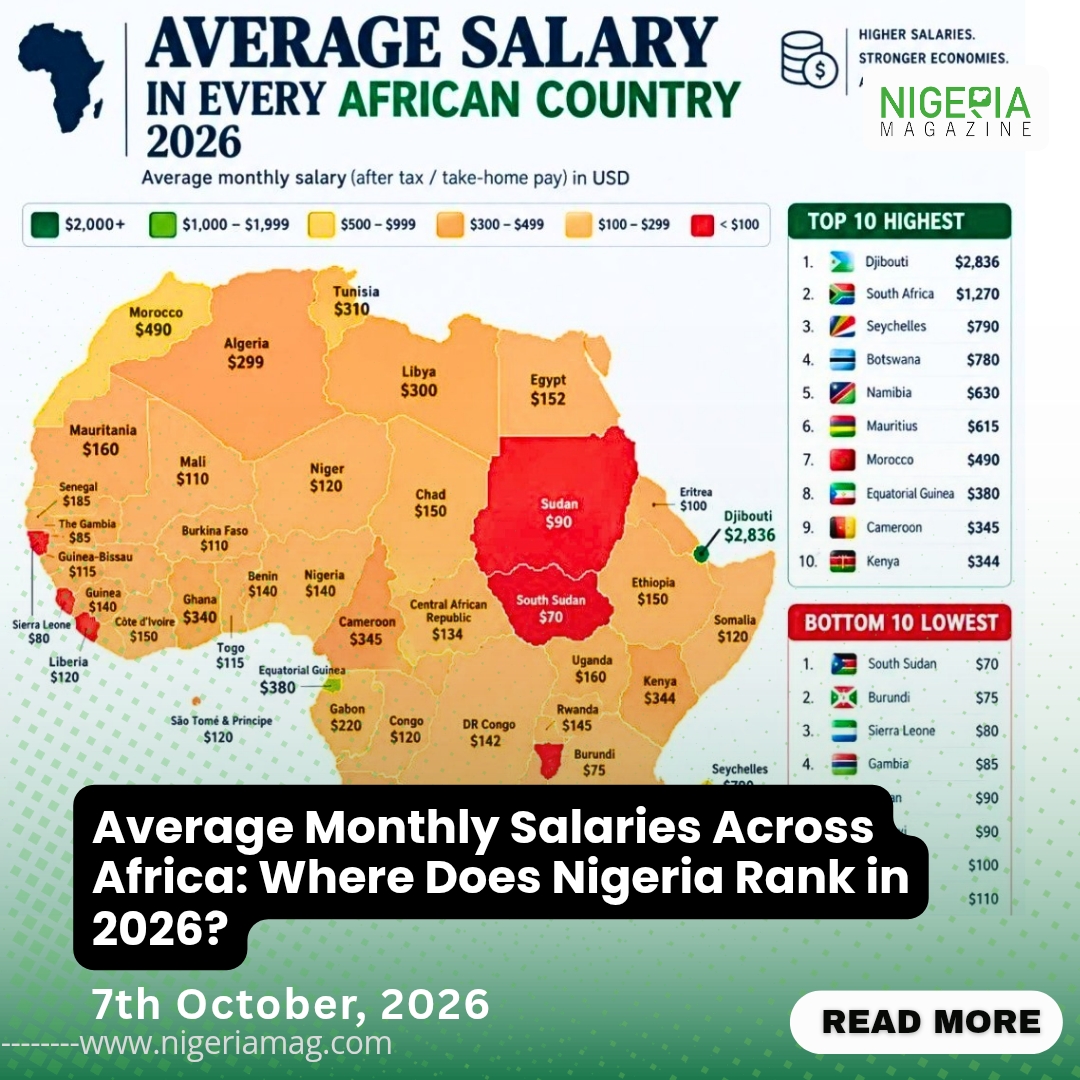
A new comparison of average monthly take-home salaries across African countries has highlighted significant differences in earnings across the continent, with Nigeria ranking 36th on the list.
According to figures shared on LinkedIn and attributed to LiveGDP, Djibouti recorded the highest average monthly salary at approximately $2,836, followed by South Africa at $1,270 and Seychelles at $790.
Botswana ranked fourth with an estimated $780 monthly average, while Namibia and Mauritius followed with $630 and $615 respectively.
Morocco recorded an estimated average monthly salary of $490, while Equatorial Guinea, Cameroon, Kenya and Ghana occupied the next positions, with figures ranging from $340 to $380.
Further down the ranking, Tanzania was listed at $195, Senegal and Comoros at $185, while Rwanda recorded $145. Angola and the Democratic Republic of Congo were listed at $143 and $142 respectively.
Nigeria ranked 36th, with an estimated average monthly take-home salary of $140. The country was placed below Benin and Guinea, both listed at $140, and above the Central African Republic, which recorded $134.
At the bottom of the ranking were South Sudan at $70, Burundi at $75, Sierra Leone at $80 and The Gambia at $85.
The figures suggest a substantial income gap across the continent. The highest figure on the list is more than 40 times the lowest.
However, the comparison should be interpreted with caution. The figures are presented in US dollars, meaning exchange-rate movements can significantly affect how countries rank. Differences in the cost of living and purchasing power also mean that the same dollar income can provide very different standards of living from one country to another.
Another important factor is Africa’s large informal economy. Average salary figures may primarily capture formal-sector workers and may not accurately represent the earnings of the majority of workers in countries where informal employment is widespread.
Some commenters on the original post also questioned individual figures, particularly those for Djibouti and Namibia, reinforcing the need to treat the ranking as an indicative comparison rather than an official measure of workers’ incomes.
Ultimately, salary rankings provide only one perspective on economic wellbeing. Purchasing power, employment opportunities, inflation, taxation and the cost of essential goods and services are equally important when comparing living standards across African countries.
For Nigeria, the country’s position on the list also highlights the impact of currency depreciation and the importance of improving productivity, wages and formal employment opportunities.

