


Nigeria Magazine | Global Health & Tech Desk
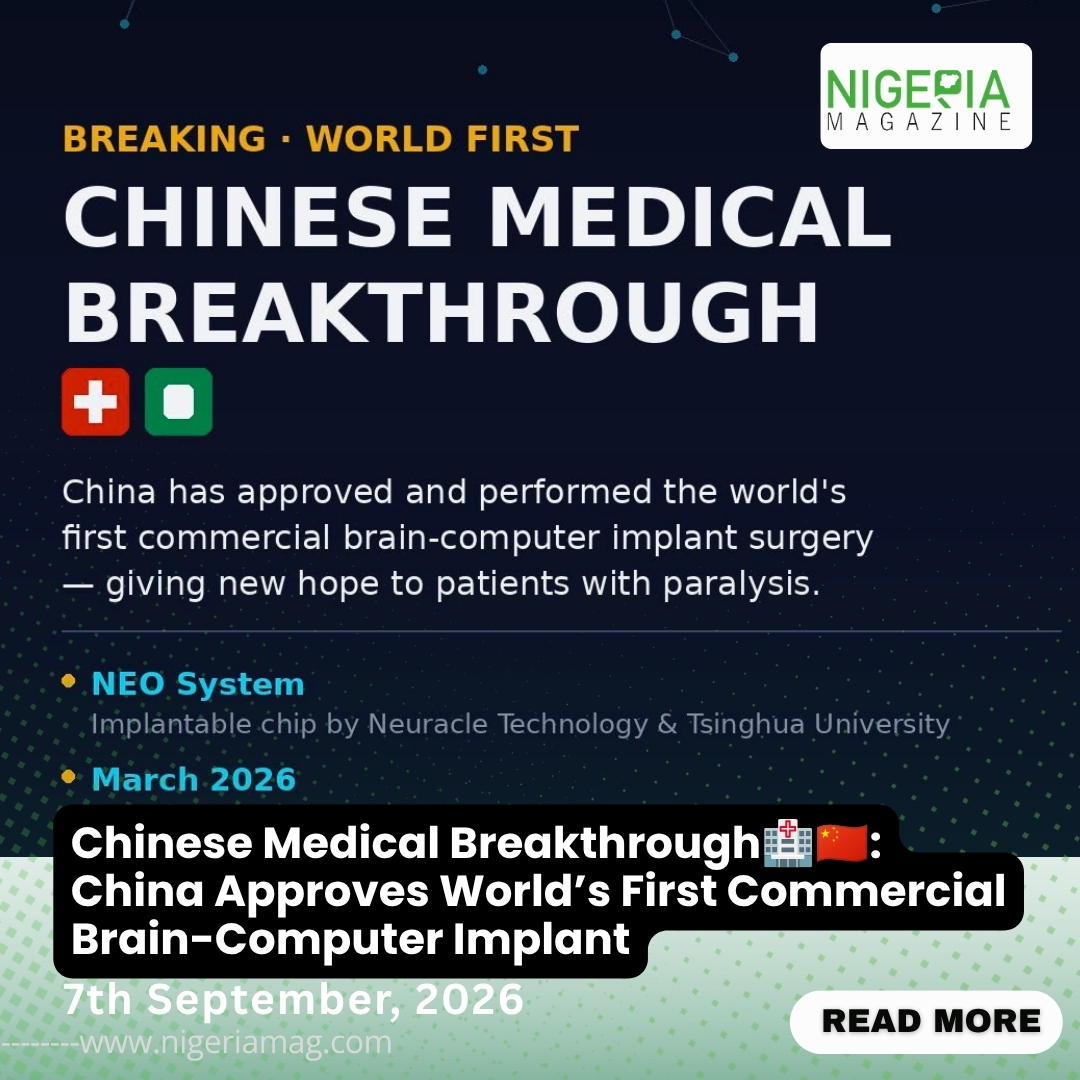
China has just made history in the fast-growing field of neurotechnology. In March 2026, the country’s medicines regulator, the National Medical Products Administration (NMPA), granted commercial approval to an invasive brain-computer interface (BCI) device — a world first that has put China at the front of a race that also includes Elon Musk’s Neuralink, Synchron, and Precision Neuroscience.
What Exactly Happened?
The approved device, known as NEO, is an implantable hand motor function compensation system developed by Shanghai-based Neuracle Technology in partnership with Tsinghua University. It’s designed to help adults with cervical spinal cord injuries regain partial use of their hands — restoring the ability to hold and grip objects that had been lost to paralysis.
What makes this approval historic isn’t just the technology itself, but the speed and completeness of China’s regulatory response. Within 48 hours of the NMPA’s approval, China’s National Healthcare Security Administration had already assigned the device a medical insurance code — meaning patients could, in principle, get the procedure covered by insurance almost immediately. That takes BCI technology out of the research lab and into everyday, reimbursable medical practice.
From Approval to Operating Table
The story didn’t stop at paperwork. In July 2026, surgeons at Huashan Hospital in Shanghai performed the world’s first commercial surgery using the newly approved implant. A patient who had lived with impaired hand mobility for a decade — the result of a car accident that damaged his spinal cord — had a coin-sized brain chip implanted. According to Shanghai’s Science and Technology Commission, the procedure captured stable, high-quality brain signals, and the patient recovered well with stable vital signs.
Why This Matters Beyond China
Brain-computer interfaces work by reading electrical signals directly from the brain and translating them into commands for external devices — bypassing damaged nerves or muscles altogether. For people living with paralysis, stroke damage, or severe spinal cord injuries, this technology offers a realistic path back to independence: gripping a cup, using a keyboard, or one day, perhaps, walking again.
China’s government has backed this push at the highest level. BCI development was named a national strategic priority in mid-2025, with a roadmap targeting major technical breakthroughs by 2027 and a fully domestic supply chain by 2030, supported by a brain science fund worth roughly $165 million. Provinces like Sichuan and Chongqing are already rolling out their own BCI pilot programmes, from rehabilitation robotics to stroke recovery therapy.
The Bigger Picture for Africa and Nigeria
For readers in Nigeria and across Africa, developments like this are worth watching closely. As BCI and other advanced neurotechnologies move from experimental labs to approved, insurance-backed treatments, the conversation will increasingly turn to access: which countries can afford to import or license this technology, and how health systems in the Global South can prepare for a coming wave of neuro-rehabilitation tools.
Whether or not this technology reaches Nigerian hospitals in the near term, the message is clear: the future of medicine is increasingly about the brain talking directly to machines — and that future has now, quite literally, begun.
#NigeriaMagazine #MedicalBreakthrough #BrainComputerInterface #China #HealthTech #Neuralink #Neuroscience #FutureOfMedicine

