


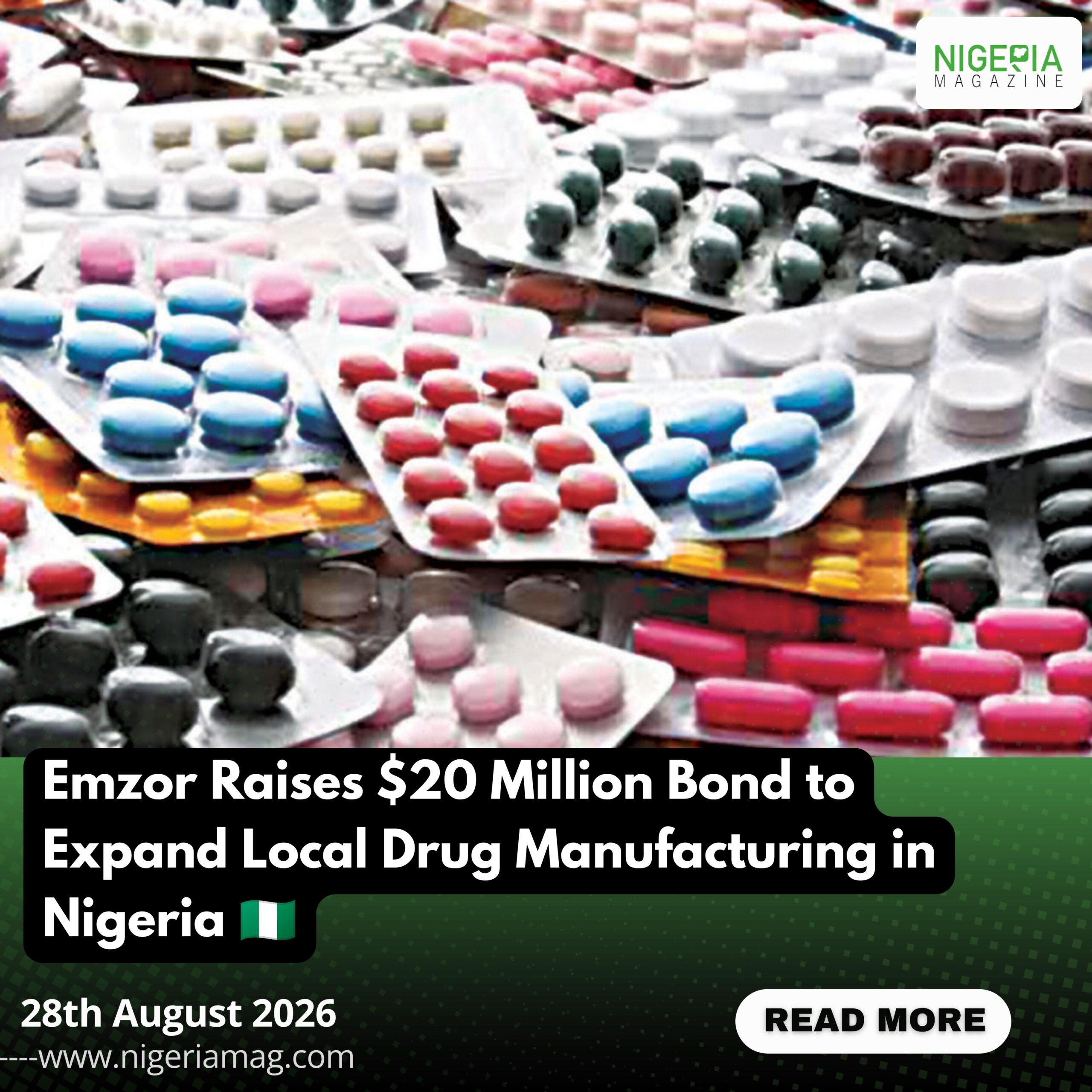
Emzor Raises $20 Million Bond to Expand Local Drug Manufacturing in Nigeria 🇳🇬
Nigerian pharmaceutical company Emzor Pharmaceutical Industries is turning to the local debt market to finance its next phase of growth, raising $20 million (about ₦26.7 billion) through a five-year bond.The bond, issued by Emzor Pharma Funding SPV Plc, carries a 19% interest rate* and forms part of the company’s broader ₦40 billion debt programme. The funds are expected to support working capital, expand manufacturing capacity and help complete what is described as Africa’s first full-scale antimalarial Active Pharmaceutical Ingredient (API) plant.The transaction is significant not only for Emzor, but also for Nigeria’s efforts to strengthen domestic pharmaceutical manufacturing.
## From a Lagos chemist shop to a major drug manufacturerEmzor’s story goes back to 1977, when the company was founded by Nigerian pharmacist Stella Okoli.
What started as a small chemist shop in Lagos has grown into one of Nigeria’s major pharmaceutical manufacturers, with a portfolio of more than 120 medicines spanning 16 therapeutic categories.The company’s latest fundraising signals a shift from simply manufacturing medicines locally to building more of the infrastructure required to produce pharmaceutical inputs within the country.That distinction matters.
Nigeria remains heavily dependent on imported pharmaceutical ingredients and finished products. When global supply chains are disrupted, currency pressures increase or international prices rise, those dependencies can quickly become a problem for local manufacturers and ultimately for consumers.
Emzor’s planned investment is therefore aimed at addressing a much larger issue than the expansion of one company.
Why the antimalarial plant mattersOne of the major uses of the funding will be completing an Active Pharmaceutical Ingredient plant focused on antimalarial production.APIs are the active substances responsible for producing the therapeutic effect in medicines. Much of the global pharmaceutical supply chain for these ingredients is concentrated outside Africa.
Developing local API manufacturing capacity could give Nigeria greater control over an important part of its pharmaceutical supply chain.
It could also reduce some of the risks associated with relying on imported ingredients, particularly in a country where foreign exchange availability and currency fluctuations can significantly affect the cost of imported goods.
For Emzor, the project represents an opportunity to move further up the pharmaceutical value chain.For Nigeria, it could be a step toward building a more resilient domestic healthcare manufacturing ecosystem.
A different kind of fundraisingThe deal is also notable because Emzor is raising capital through debt rather than equity
For many startups and growing businesses, fundraising is often associated with selling a percentage of the company to investors.A bond works differently.
Instead of giving investors ownership in the business, the company raises money by borrowing from investors and agreeing to pay interest and repay the principal according to the terms of the bond.
For an established manufacturer with significant infrastructure and expansion plans, debt can provide access to substantial capital without requiring the founders or existing shareholders to give up additional ownership.
Of course, debt also comes with a major responsibility: the company must service the borrowing.
The 19% interest rate attached to the five-year bond reflects the cost of raising capital in Nigeria’s current financial environment.
What this says about Nigeria’s capital marketThe transaction also highlights the growing role that Nigeria’s domestic capital markets can play in financing industrial businesses.
Technology startups have received significant attention from investors in recent years, but building a productive economy requires capital for companies involved in manufacturing, healthcare, agriculture, energy and other physical industries.
These businesses often need much larger amounts of capital and longer investment horizons than many early-stage technology companies.
Emzor’s bond demonstrates one way an established Nigerian company can tap institutional and capital-market investors to fund long-term expansion.
It also suggests that there is growing investor appetite for businesses operating in sectors considered strategically important to Nigeria’s economy.
Beyond EmzorThe bigger question is whether more Nigerian manufacturers can follow this path.Nigeria has spent years trying to reduce its dependence on imported goods, but local production requires more than government policy. Companies need access to affordable capital, reliable power, infrastructure, skilled workers and predictable regulations.
Pharmaceutical manufacturing adds another layer of complexity because quality standards, research, regulatory approvals and supply-chain reliability are critical.
If companies like Emzor can successfully expand local production, the benefits could extend beyond the company itself.
More domestic manufacturing could support jobs, strengthen local supply chains, improve access to essential medicines and reduce exposure to international supply disruptions.
The $20 million bond may therefore be viewed as more than a fundraising transaction.
It is a bet on the future of Nigerian manufacturing.
And for a company that started from a small chemist shop in Lagos nearly five decades ago, Emzor’s latest move shows how far a Nigerian pharmaceutical business can go when it combines long-term ambition with access to the right capital.
#NigeriaMagazine

