



by Moses Chibuike Ezechukwu
OPay’s extraordinary growth is more than a fintech success story. Its rising transaction volumes, expanding customer base, growing lending business and reported plans for a potential U.S. listing are forcing Nigeria to confront a bigger question: how can the country turn the success of its homegrown digital economy into broader wealth and stronger local capital markets?
Nigeria’s fintech story has moved far beyond being an interesting side chapter in the country’s technology industry. It is now becoming one of the clearest examples of how Nigerians are changing the way money moves, businesses operate and financial services are delivered.
And few companies illustrate that transformation as dramatically as OPay.
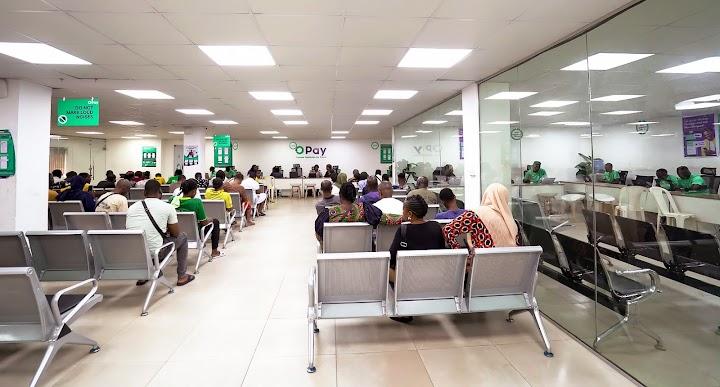
According to figures contained in an investment document reported by Nigerian business publications, OPay processed an astonishing $358 billion in gross transaction value in 2025, compared with $166.2 billion in 2024. That represents a 115 percent increase in a single year. Its monthly active users also reportedly climbed by 57 percent to 39.3 million.
Those numbers are difficult to ignore.
But there is an important distinction. Gross transaction value is not the same thing as revenue or profit. It represents the value moving through a platform, not the amount the company keeps as earnings. Still, the scale tells us something important about the growing role of digital financial platforms in Nigeria.
From Payments to a Financial Ecosystem
OPay began its Nigerian journey largely around digital payments and financial transactions. Over time, however, the platform has expanded into a broader financial ecosystem.
The latest figures show that lending has become an increasingly important part of that story. New loans reportedly increased by 285 percent in 2025 to $938.3 million, while quarterly unique borrowers in Nigeria reached 4.6 million. Revenue also jumped 161 percent to approximately $536.3 million.
Perhaps even more significant is the company’s reported return to profitability.
Techpoint Africa reported that OPay recorded a net profit of about $72.47 million in 2025, reversing a loss of approximately $50.98 million in the previous year. Its operating income and operating cash flow also improved considerably.
For a technology company operating in one of the world’s most challenging emerging markets, that shift matters.
Rapid growth is impressive, but sustainable growth is what ultimately determines whether a business can become an institution.
Nigeria Remains at the Centre
Despite OPay’s international operations, Nigeria remains the heart of its business.
Reports indicate that Nigeria accounted for 88.1 percent of OPay’s revenue in 2025.
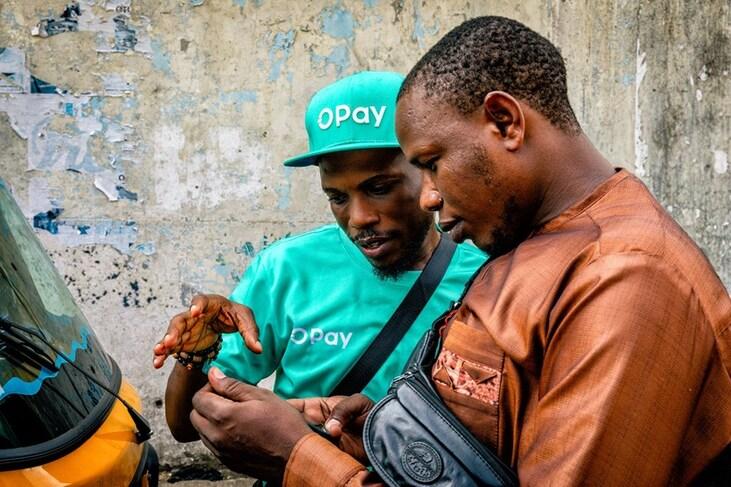
That figure says a lot about Nigeria’s digital economy.
Millions of Nigerians now use mobile platforms for activities that once required a physical bank branch. Transfers, payments, savings, business transactions and access to credit are increasingly taking place through smartphones.
For small businesses, market traders, freelancers and individuals who may have previously struggled with traditional banking systems, fintech platforms have provided another route into the formal financial system.
That does not mean every problem has disappeared. Nigerians still face issues around internet connectivity, fraud, digital literacy, customer service and trust. But the growth of platforms such as OPay demonstrates that the appetite for convenient digital financial services is enormous.
The Bigger Question: Where Will the Wealth Be Created?
This is where the OPay story becomes bigger than OPay.
The reported plans for a potential U.S. initial public offering, which could value the company at around $4 billion, have sparked an important conversation about Nigeria’s capital market. Major international banks have reportedly been involved in preparations, although the timing, structure and final valuation of any listing remain subject to change.
If OPay eventually lists abroad, international investors could gain an opportunity to participate directly in the company’s future.
But what about Nigerian investors?
That is the uncomfortable question.
Nigeria has spent years trying to deepen its capital market and encourage more Nigerians to invest in businesses operating within the country. Yet some of the country’s fastest-growing technology companies have increasingly looked toward international markets when seeking large-scale capital.
There are understandable reasons for this.
International exchanges can provide access to deeper pools of capital, a wider investor base and greater global visibility. For a company with ambitions beyond Africa, an international listing can also make strategic sense.
But there is another side to the argument.
When a company built substantially on Nigerian consumers and Nigerian economic activity grows into a multibillion-dollar institution, Nigerians naturally want a pathway to participate in that wealth creation.
The Capital Market Challenge
The OPay situation should therefore not simply be interpreted as a criticism of the company.
Instead, it should serve as a wake-up call for Nigeria.
Why are ambitious Nigerian and Nigeria-focused companies looking outside the country for their biggest capital opportunities?
The answer cannot simply be that Nigerian companies prefer foreign markets.
Nigeria must ask whether its own capital market is sufficiently attractive, liquid and technologically prepared to support companies of the next generation.
If local investors can participate meaningfully in successful Nigerian businesses, wealth can remain within the economy for longer. Pension funds, institutional investors, retail investors and other domestic capital providers could potentially become more important sources of growth for Nigerian companies.
That requires deeper markets, stronger investor confidence, improved corporate governance, reliable regulation and products that make investing easier for ordinary Nigerians.
A Fintech Story With African Implications
There is also a wider African dimension.
OPay’s growth demonstrates that financial technology can scale rapidly when it addresses a real problem. Africa has hundreds of millions of people who need convenient, affordable and accessible financial services.
The opportunity is therefore much bigger than payments.
Fintech can support small businesses, expand access to credit, facilitate cross-border commerce and help bring more people into the formal financial system.
But with that opportunity comes responsibility.
As digital financial platforms become more powerful, issues such as consumer protection, data security, responsible lending and financial literacy must remain central to the conversation.
Growth should not simply be measured by the number of transactions moving through an application. It should also be measured by whether people’s financial lives are actually improving.
The Road Ahead
OPay reportedly has an ambition to reach one billion users by 2031, an enormous target that illustrates how large the company’s ambitions have become.
Whether it reaches that number is another question. Markets change, competition becomes tougher and technology evolves quickly.
What is already clear, however, is that Nigeria’s fintech industry has reached a point where it can no longer be dismissed as merely a collection of startups experimenting with digital payments.
It has become an important part of the country’s economic infrastructure.
OPay’s reported $358 billion transaction figure should therefore be viewed in context. It does not mean OPay generated $358 billion in income, nor does it mean that amount was added to Nigeria’s GDP. Transaction value can include money moving repeatedly through the financial system.
What it does show is the extraordinary scale at which digital financial activity is taking place.
And perhaps that is the most important lesson.
Nigeria has the customers. It has the entrepreneurs. It has the technology talent. It has the demand.
The next challenge is making sure that the wealth created by this digital revolution can also deepen Nigeria’s own financial markets and create opportunities for Nigerians to participate in the success of the companies they helped build.
OPay’s next chapter may ultimately be written on Wall Street.
But the story that made that chapter possible was written, in large part, in Nigeria.
#NigeriaMagazine #OPay #NigeriaFintech #FintechAfrica #NigeriaBusiness #AfricanTechnology #DigitalEconomy #CapitalMarket #NigerianEconomy #TechInNigeria #AfricanFintech #DigitalBanking #Investment #NigeriaCapitalMarket #FinancialInclusion #AfricaRising #BusinessNews #NigeriaTech #EconomicGrowth

